







What's Happening?
D.R. Horton, the largest homebuilder in the United States, has entered into a multiyear agreement with Promise Robotics, a Canadian robotics firm. This partnership aims to construct over 1,250 homes using Promise Robotics' AI-powered 'factory as a service'
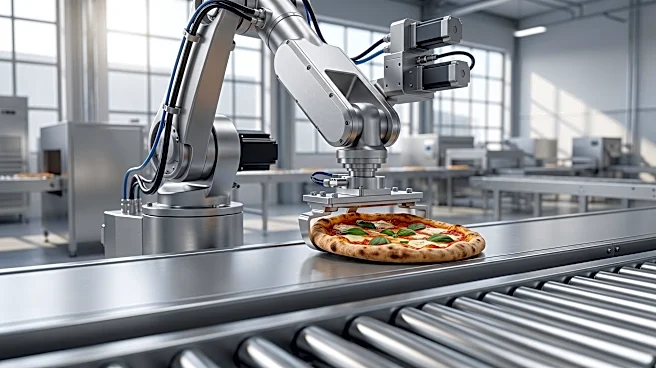
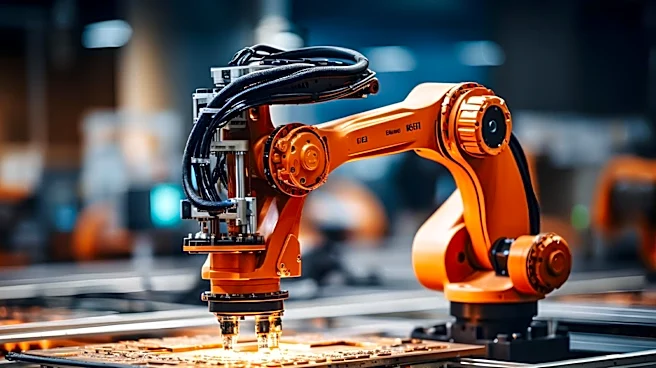
platform. This collaboration marks D.R. Horton's first venture into incorporating advanced robotics and artificial intelligence into its homebuilding process. Promise Robotics' platform will enable D.R. Horton to utilize AI-enhanced production capabilities without the need for significant upfront investment in factory infrastructure. The system can integrate D.R. Horton's existing designs to generate instructions and workflows for robotic arms, which will handle the factory production of components like stairs, doors, window frames, and increasingly, plumbing and HVAC elements. The final assembly of these components will occur on-site.
Why It's Important?
This partnership signifies a significant step towards the industrialization and modernization of the U.S. homebuilding sector. By adopting AI and robotics, D.R. Horton aims to address critical challenges such as lagging construction times, material shortages, supply chain disruptions, and a tight labor market, which have historically impacted profit margins. The 'factory as a service' model offers a scalable solution that could dramatically reduce delivery times and potentially stabilize home prices by increasing efficiency. This move could set a precedent for other large homebuilders, accelerating the adoption of advanced manufacturing techniques across the industry. It also highlights the growing role of AI in traditional sectors, transforming how homes are designed, produced, and delivered to consumers.
What's Next?
The immediate next steps involve the implementation and scaling of Promise Robotics' platform to produce the initial 1,250 homes for D.R. Horton. Success in this initial phase could lead to a broader integration of robotic manufacturing into D.R. Horton's operations and potentially inspire other major homebuilders like PulteGroup and Lennar, who are already exploring AI tools, to follow suit. The industry will closely watch how this partnership impacts construction timelines, cost efficiencies, and the quality of homes produced. Furthermore, the long-term implications include a potential shift in the labor market for construction, with a greater demand for skilled workers in robotics and AI integration, and a redefinition of traditional homebuilding practices.
Beyond the Headlines
This collaboration extends beyond mere technological adoption; it represents a fundamental re-imagining of the homebuilding process, moving it closer to advanced manufacturing models seen in other industries. The ethical implications of increased automation in construction, particularly concerning job displacement and the need for workforce retraining, will become more prominent. Moreover, the integration of AI into design and production could lead to more sustainable building practices, optimized material use, and reduced waste. This shift could also influence architectural design, allowing for greater complexity and customization at scale. Ultimately, this partnership could pave the way for a more efficient, resilient, and technologically advanced housing market in the U.S., addressing long-standing issues of affordability and availability.