



What's Happening?
Tesla's stock experienced a significant decline, dropping to its lowest point since last August, following a Q2 earnings report that highlighted unsold vehicles and incidents related to its driver assistance technology. CEO Elon Musk's update on the company's
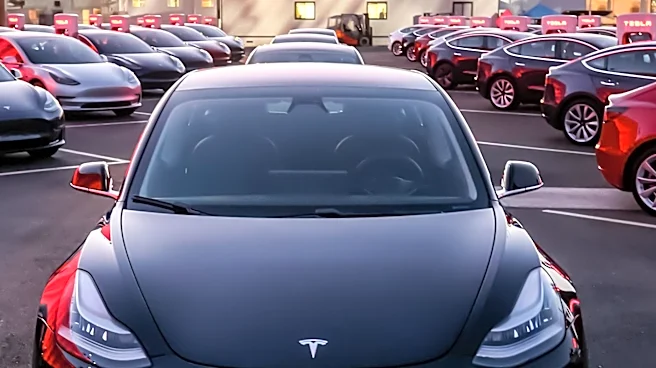
Robotaxi service, which has been expanding in Florida and Texas, did not alleviate investor concerns. The Robotaxi service, despite its ambitious growth plans, faced setbacks, including a reported incident of a Tesla robotaxi driving the wrong way on a one-way street in Tampa. Despite these challenges, Tesla continues to dominate the U.S. electric vehicle market, holding over 50% market share in Q2, although this is a decrease from its peak of 80% in 2019.
Why It's Important?
The decline in Tesla's stock and the challenges faced by its Robotaxi service highlight the difficulties in maintaining investor confidence amidst operational setbacks. Tesla's continued dominance in the U.S. EV market is significant, as it faces increasing competition from both established automakers and new startups. The company's ability to navigate these challenges will impact its market position and influence the broader EV industry's direction. The Robotaxi service's issues also raise questions about the viability and safety of autonomous vehicle technology, which could affect public perception and regulatory scrutiny.
What's Next?
Tesla is expected to continue expanding its Robotaxi service, with plans to increase its presence in more U.S. cities. The company will need to address the operational challenges and safety concerns to regain investor confidence. Additionally, Tesla's market strategy will likely focus on maintaining its leadership in the EV sector while adapting to the competitive landscape. The response from competitors, who are also focusing on EV affordability and innovation, will shape the industry's future dynamics.
Beyond the Headlines
The challenges faced by Tesla's Robotaxi service underscore the broader ethical and safety considerations of autonomous vehicle technology. As Tesla and other companies push forward with driverless solutions, the industry must address public safety concerns and establish robust regulatory frameworks. The outcome of these efforts will influence the pace of adoption and integration of autonomous vehicles into everyday transportation.