





What's Happening?
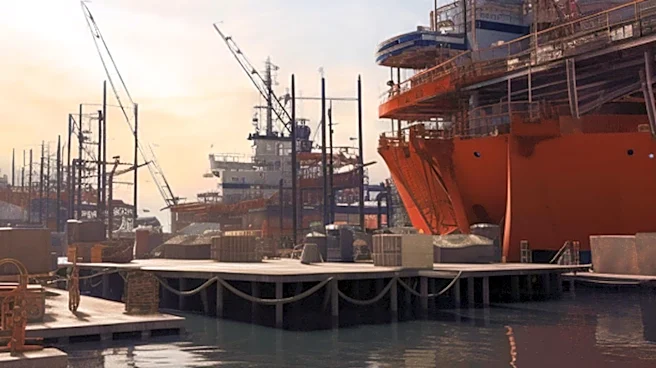
IAM Local S6, representing nearly 4,500 employees at Bath Iron Works (BIW), has successfully negotiated a new five-year collective bargaining agreement with the company. The agreement, effective Monday and running through 2031, includes a 17% wage increase
in the first year, followed by 4% increases in subsequent years. Other key provisions of the contract are increased hourly premiums for second and third-shift employees, locked-in healthcare costs for the entire five-year period, and enhanced protections against job displacement due to new technology, artificial intelligence, and robotics. The union emphasized that no concessions were made during the negotiations. David Sullivan, IAM Eastern Territory General Vice President, lauded the agreement as historic, recognizing the significant contributions of their members to BIW, the state of Maine, and national defense. BIW President Charles F. Krugh also expressed satisfaction with the agreement, stating it was reached through good-faith negotiations and will help maintain production momentum for building U.S. Navy ships.
Why It's Important?
This new collective bargaining agreement is significant for several reasons. For the nearly 4,500 BIW employees, it provides substantial wage increases and job security, particularly with protections against emerging technologies like AI and robotics. This could set a precedent for other manufacturing sectors facing similar technological advancements, influencing future labor negotiations across the U.S. defense industry. For Bath Iron Works, a major defense contractor, the agreement ensures labor stability and continued production of surface combatants for the U.S. Navy, which is crucial for national security and defense capabilities. The locked-in healthcare costs offer predictability for both employees and the company, while the wage increases aim to retain experienced workers and attract new talent in a competitive labor market. The successful negotiation without union concessions highlights the strength of organized labor in securing favorable terms for its members, potentially empowering other unions in their upcoming negotiations.
What's Next?
The new collective bargaining agreement officially takes effect on Monday and will remain in force until 2031. Over the next five years, both Bath Iron Works and IAM Local S6 will focus on implementing the terms of the agreement, including the scheduled wage increases and the integration of new technologies under the agreed-upon protections. The stability provided by this long-term contract is expected to allow BIW to continue its vital work of building ships for the U.S. Navy without labor disruptions. Other unions and companies in the defense and manufacturing sectors will likely observe the outcomes of this agreement, particularly regarding the provisions for technological advancements and their impact on the workforce. This could influence future collective bargaining strategies and discussions around automation and job security in similar industries across the nation.
Beyond the Headlines
The agreement between Bath Iron Works and IAM Local S6 extends beyond immediate economic benefits, touching upon broader societal and industrial implications. The inclusion of strong protections against new technology, artificial intelligence, and robotics in a major industrial labor contract signals a growing awareness and proactive approach to the challenges posed by automation in the workforce. This could serve as a model for how industries can adapt to technological change while safeguarding employee livelihoods and fostering a sense of security. Furthermore, the emphasis on retaining an experienced workforce underscores the value of skilled labor in complex manufacturing, particularly in critical sectors like national defense. The successful negotiation without concessions also reinforces the role of collective bargaining as a mechanism for workers to assert their interests in an evolving economic landscape, potentially influencing public discourse on labor rights and the future of work in the age of AI.