








What's Happening?
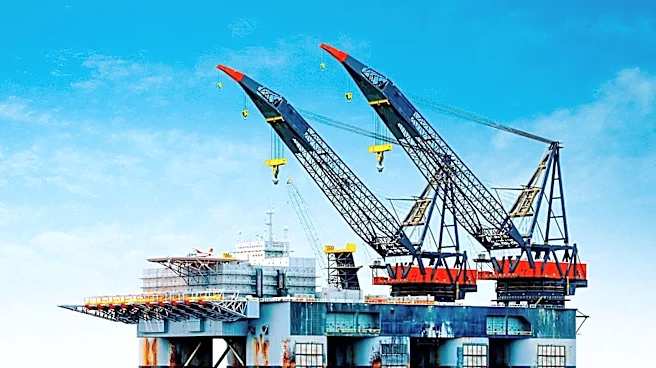
Heerema Marine Contractors has successfully reduced the North Atlantic transit time of its semi-submersible crane vessel, Sleipnir, by 2.5 days through a data-driven voyage optimization pilot. This initiative, in collaboration with French ocean intelligence
company Amphitrite, involved using a vessel-specific voyage optimization platform that leverages five years of operational data. The optimization reduced the sailing distance by 240 nautical miles and cut CO2 emissions by up to 18%, while maintaining higher average speeds without increasing fuel consumption. The system identified optimal sailing windows and routes, such as a northerly path around a developing storm, to take advantage of favorable tailwinds and ocean currents. This approach not only improved operational efficiency but also provided Heerema with valuable insights into Sleipnir's performance during transit.
Why It's Important?
The successful implementation of data-driven voyage optimization by Heerema Marine Contractors highlights the potential for significant operational and environmental benefits in the maritime industry. By reducing transit times and emissions, the initiative supports Heerema's decarbonization strategy and demonstrates the value of integrating vessel-specific performance modeling with high-resolution ocean intelligence. This approach can lead to more efficient fuel consumption and lower emissions, which are critical goals for the shipping industry as it seeks to reduce its environmental impact. The collaboration with Amphitrite showcases how advanced data analytics can enhance decision-making processes, leading to more sustainable and cost-effective maritime operations.
What's Next?
Following the success of this pilot, Heerema Marine Contractors may continue to expand the use of data-driven voyage optimization across its fleet. The insights gained from this initiative could inform future strategies for improving fleet efficiency and reducing emissions. Additionally, the maritime industry may see increased adoption of similar technologies as companies seek to enhance operational efficiency and meet environmental targets. Stakeholders, including shipping companies and environmental regulators, will likely monitor the outcomes of such initiatives to assess their broader applicability and impact on industry standards.
Beyond the Headlines
The use of data-driven optimization in maritime operations could have far-reaching implications beyond immediate operational gains. It represents a shift towards more intelligent and adaptive maritime logistics, where real-time data and predictive analytics play a crucial role in decision-making. This could lead to a transformation in how maritime routes are planned and executed, potentially setting new benchmarks for efficiency and sustainability in the industry. Furthermore, the integration of such technologies may drive innovation in related fields, such as autonomous shipping and smart port operations, contributing to a more interconnected and efficient global supply chain.