






What's Happening?
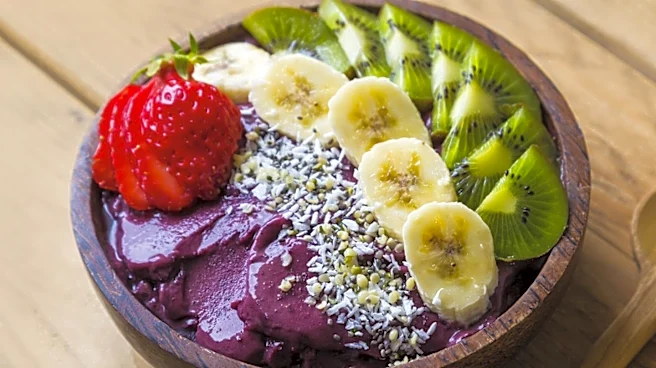
Açaí bowls, once a niche item in trendy juice bars, have become ubiquitous across the U.S., appearing in cafés, smoothie chains, grocery stores, and even airports. Their vibrant appearance and customizable toppings have contributed to their status as
a popular health food. However, experts like Monica Kelly, a registered dietitian at Montefiore Health System, and Lance King, a nutritionist at XFIT Coaching, are advising consumers to carefully examine the ingredients in these bowls. While açaí berries themselves are rich in heart-healthy fats, antioxidants, fiber, and essential vitamins, the nutritional value of a bowl can vary significantly based on added ingredients. Many commercially prepared bowls often contain sweetened açaí puree, fruit juice concentrates, flavored granola, and excessive amounts of added sugars and calories, potentially making them as unhealthy as a milkshake despite their 'natural' ingredients.
Why It's Important?
The widespread availability and perceived health benefits of açaí bowls mean that many consumers might be unknowingly consuming high amounts of sugar and calories. This is particularly important for individuals managing blood sugar levels, weight, or those with diabetes. The marketing of these bowls as a healthy option can mislead the public, potentially undermining dietary goals and contributing to increased sugar intake. The issue highlights a broader trend in the food industry where 'healthy' labels can mask less nutritious realities, impacting public health and consumer awareness. Understanding the actual nutritional content empowers consumers to make informed choices, supporting better dietary habits and health outcomes.
What's Next?
Consumers are encouraged to seek out açaí bowls made with unsweetened açaí puree, limit portions of granola and sweetened toppings, and choose frozen açaí blends without added sugars when purchasing from grocery stores. Making açaí bowls at home is also recommended as a way to control ingredients. For those with specific dietary concerns, pairing açaí bowls with protein sources like yogurt, nuts, or eggs can help balance blood sugar. This shift towards greater ingredient scrutiny could lead to increased demand for more transparent labeling and healthier options from food establishments, potentially influencing product development in the health food sector.
Beyond the Headlines
The popularity of açaí bowls reflects a broader cultural emphasis on wellness and visually appealing food, often driven by social media trends. This phenomenon underscores the challenge consumers face in distinguishing genuinely healthy options from those that merely appear so. It also points to the need for greater nutritional literacy, where individuals understand that 'natural' or 'fruit-based' does not automatically equate to low sugar or low calorie. The discussion around açaí bowls serves as a microcosm for the larger debate on food marketing, consumer education, and the responsibility of food providers to offer transparent and truly nutritious products.