






What's Happening?
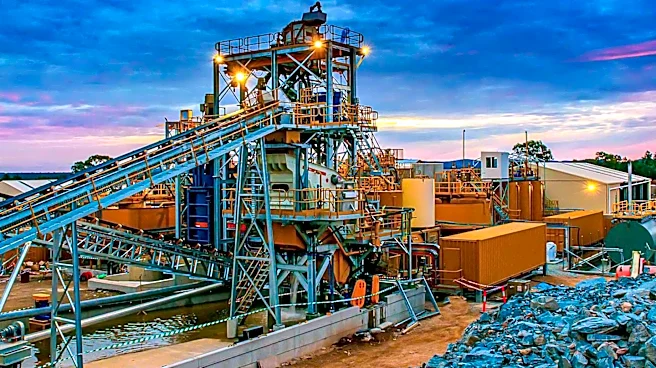
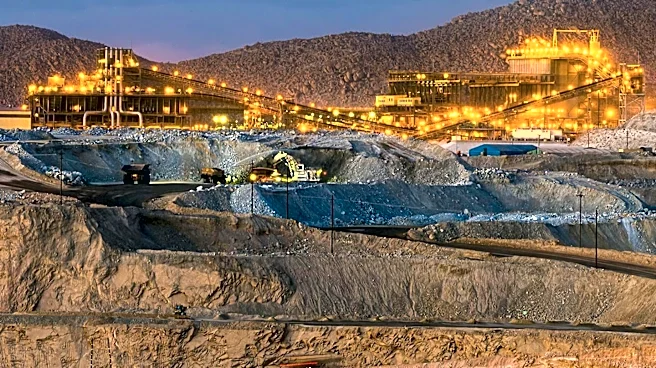
The Dominican Mining Company (Emidom) is actively evaluating the necessary technology, investment costs, and economic viability for a potential rare earth mining operation in Pedernales. Miguel Díaz, Vice President of Emidom, stated that the 150 million
tons of rare earth elements announced by President Luis Abinader are a starting point, but commercial exploitation depends on completing several technical stages, including resource studies, metallurgical processing, and feasibility assessments. The project is located in the Ávila Mining Fiscal Reserve and adheres to the international standard NI 43-101 for presenting technical and scientific information. Emidom is conducting specific metallurgical research due to the unique characteristics of the karst bauxite deposit and is engaging in technical exchanges with international laboratories and technology providers.
Why It's Important?
The potential exploitation of rare earth elements in the Dominican Republic holds significant implications for the U.S. and global supply chains. Rare earth elements are crucial for various high-tech industries, including defense, renewable energy, and electronics, where China currently dominates production. Diversifying the global supply of these critical minerals is a strategic priority for the U.S. to reduce reliance on single sources and enhance national security. A viable rare earth operation in a neighboring country like the Dominican Republic could offer a more secure and geographically proximate supply, potentially fostering economic partnerships and reducing geopolitical vulnerabilities for U.S. industries. The development could also attract U.S. investment in mining and processing technologies, creating economic opportunities.
What's Next?
Emidom is focused on completing the resource certification and defining the processing route, which will form the basis of the feasibility study. The company has not yet provided definitive figures for investment costs or timelines for the conclusion of studies or the start of mining operations. The project aims to go beyond mineral extraction to include the recovery of rare earths and other critical minerals under circular economy principles. The Dominican Republic is also strengthening its national analytical capabilities and training specialized personnel. The Minister of Energy and Mines, Joel Santos, emphasized that the country is not seeking to engage in geopolitical disputes over critical minerals but will act in its best interests, with decisions contingent on the economic and technical feasibility studies underway.
Beyond the Headlines
The pursuit of rare earth exploitation in the Dominican Republic reflects a global scramble for critical minerals, driven by technological advancements and geopolitical competition. The emphasis on transparency, legal compliance, and national interest in selecting technologies and partners highlights the growing awareness of environmental and social responsibilities in mining. This project could serve as a model for other developing nations seeking to leverage their natural resources while adhering to international standards. The long-term implications include a potential shift in the global rare earth supply chain, fostering greater resilience and reducing market volatility. It also underscores the increasing importance of sustainable mining practices and the development of domestic processing capabilities to maximize economic benefits and minimize environmental impact.