





What's Happening?
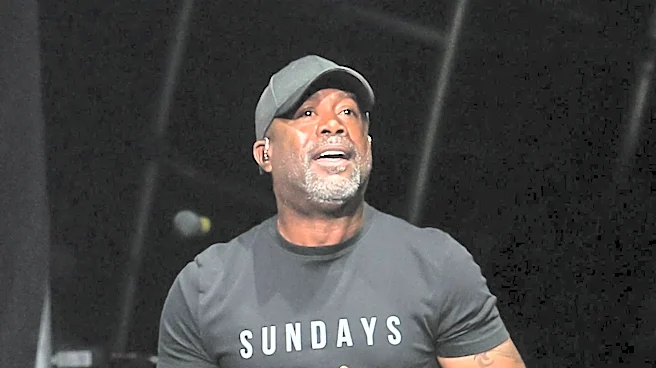
Darius Rucker, the acclaimed lead singer of Hootie & the Blowfish, harbored significant doubts about securing a country music record deal in 2008 due to the genre's lack of Black artists on mainstream radio for 25 years. Despite his prior success, Rucker questioned
whether any label would take a chance on him, reflecting on the racial barriers prevalent in the industry. He recounted experiencing racism during his early career with Hootie & the Blowfish in South Carolina, which prepared him for potential adversity in country music. Rucker ultimately signed with Capitol Records, and his debut country single, “Don't Think I Don't Think About It,” quickly reached No. 1. He credits country legend Charley Pride, who mentored him, with encouraging him to break down barriers. Rucker views his success as a way to bring diversity to country music, stating, “I believe that everything that happened happened for me so I could be the one to bring color to country music.”
Why It's Important?
Rucker's journey highlights the historical racial disparities within the country music industry and the challenges faced by Black artists seeking mainstream acceptance. His initial apprehension underscores the systemic issues that have historically limited diversity in the genre. His eventual success, with five of his first six country singles reaching the top spot, demonstrates a significant breakthrough, proving that diverse artists can achieve widespread popularity in country music. This narrative is crucial for understanding the ongoing efforts to promote inclusivity and representation in the entertainment industry. Rucker's perspective, influenced by Charley Pride's pioneering efforts, emphasizes the importance of mentorship and resilience in overcoming racial barriers, paving the way for future generations of diverse artists in country music.
What's Next?
Darius Rucker's continued presence and success in country music are likely to further inspire and encourage other diverse artists to pursue careers in the genre. His story, as detailed in his documentary 'Darius Rucker: They Call Me Hootie,' will continue to serve as a powerful narrative about perseverance and breaking racial barriers. The industry may see increased discussions and initiatives aimed at fostering greater diversity and inclusion, building on the paths forged by artists like Rucker and Pride. Record labels and radio stations might face continued pressure to broaden their rosters and playlists to reflect a more diverse range of artists and voices, potentially leading to a more inclusive landscape in country music.
Beyond the Headlines
Rucker's experience extends beyond individual success, touching upon broader societal themes of representation and cultural identity in music. His belief that he was meant to 'bring color to country music' speaks to a larger mission of challenging entrenched norms and expanding the cultural fabric of a genre often perceived as homogenous. This narrative prompts deeper reflection on how cultural industries can evolve to become more equitable and representative of diverse audiences and creators. It also highlights the enduring impact of pioneering figures like Charley Pride, whose legacy continues to empower subsequent generations to challenge and transform established cultural landscapes, fostering a more inclusive artistic environment.