




What's Happening?
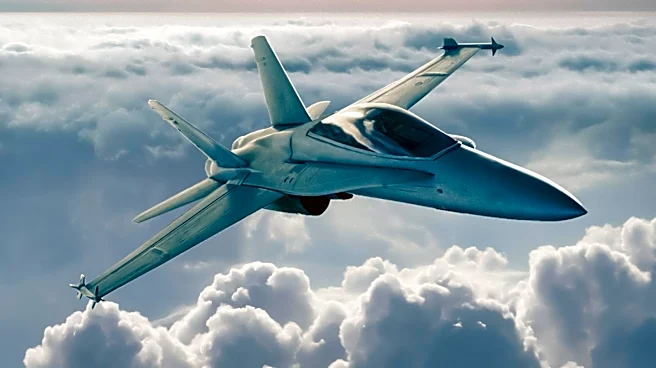
Archer Aviation, in collaboration with Anduril, has introduced a new autonomous VTOL aircraft platform designed for both defense and commercial applications. The defense variant, named Thunder, is a Group 5 autonomous attack rotorcraft intended to augment
the capabilities of crewed attack aircraft. This aircraft features a series hybrid-electric powertrain and dual tiltrotors, which help maintain efficiency by reducing power demand and fuel consumption during flight. The tiltrotor configuration allows for vertical takeoff and landing, combined with wingborne cruise, enabling operations independent of runways and without the range limitations of traditional rotorcraft. Archer's CEO, Adam Goldstein, emphasized that the design was developed from scratch to meet modern commercial and defense needs. The first flight of Thunder is scheduled for 2027.
Why It's Important?
The unveiling of the Thunder aircraft represents a significant advancement in military aviation technology, potentially enhancing the operational capabilities of defense forces. By integrating advanced VTOL technology, the aircraft can perform missions that require flexibility and efficiency, such as rapid deployment and reconnaissance. This development could lead to increased demand for similar technologies in both military and commercial sectors, driving innovation and investment in the aerospace industry. The collaboration between Archer and Anduril also highlights the growing trend of partnerships between tech companies and defense contractors to develop cutting-edge solutions for complex challenges.
What's Next?
The next steps for Archer and Anduril involve preparing for the first flight of the Thunder aircraft in 2027. This will likely include extensive testing and refinement of the aircraft's systems to ensure it meets the rigorous standards required for military applications. Additionally, the companies may seek further collaborations with government agencies and defense organizations to explore potential uses and secure contracts. The success of this project could pave the way for future innovations in VTOL technology and its applications in various sectors.