


What's Happening?
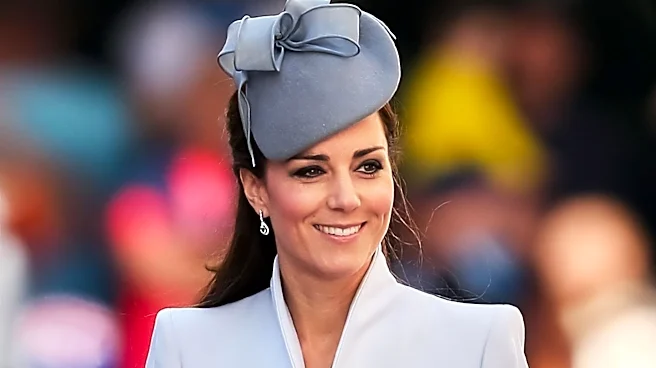
The Princess of Wales, Catherine, has been observed making bolder fashion statements during recent royal engagements, moving away from her previously more muted workwear. This shift includes wearing dresses with daring thigh-splits and experimenting with various
silhouettes, lengths, and colorways. Notably, she wore a navy and white polka dot dress from Alessandra Rich with a leg-baring button-up skirt during a 2019 exhibition visit and an emerald green Italian silk Suzannah London tea dress with a front leg split for Mental Health Awareness Week in 2023. These choices highlight a departure from traditional royal fashion norms, with the Princess opting for more adventurous styles that reveal her toned legs. Her fashion influence remains significant, with royal fans actively tracking and replicating her outfits despite efforts to keep the focus on her work.
Why It's Important?
The Princess of Wales's evolving fashion choices hold significance beyond mere aesthetics, reflecting a subtle yet impactful shift in royal public image. By embracing more contemporary and 'risky' styles, she challenges traditional perceptions of royal attire, potentially modernizing the monarchy's image and making it more relatable to a broader audience. This move could influence fashion trends globally, given her status as a fashion icon, and may encourage a more diverse and expressive approach to dressing within public life. For the fashion industry, her choices provide a powerful endorsement for designers and styles, driving consumer interest and sales. Furthermore, by demonstrating that royal engagements can accommodate more fashion-forward looks, she subtly redefines the boundaries of appropriate attire for public figures, potentially inspiring other high-profile individuals to express their personal style more freely.
What's Next?
It is anticipated that the Princess of Wales will continue to integrate more contemporary and daring fashion elements into her wardrobe for future royal engagements. This trend suggests a sustained effort to balance traditional royal decorum with modern style, potentially leading to further experimentation with designers, cuts, and fabrics. Her future appearances will likely be closely scrutinized by fashion commentators and the public, with each outfit choice potentially setting new trends or sparking discussions about royal protocol and personal expression. This evolving style could also influence how other members of the royal family approach their public image, possibly encouraging a broader embrace of modern fashion within the institution. The continued tracking and replication of her outfits by royal fans and the fashion industry are also expected, solidifying her role as a global style influencer.
Beyond the Headlines
The Princess of Wales's sartorial evolution carries deeper implications regarding the intersection of tradition, modernity, and personal agency within the British monarchy. Her choice to wear 'risky' thigh-split dresses can be interpreted as a subtle assertion of individuality and a strategic move to connect with a contemporary audience, demonstrating that royalty can be both regal and fashion-forward. This shift challenges the historical constraints often placed on royal women's attire, suggesting a gradual redefinition of what is considered appropriate and powerful. Ethically, it raises questions about the balance between personal expression and institutional expectations, and how public figures navigate these pressures. Culturally, it reflects broader societal trends towards greater openness and individuality, even within highly traditional institutions. This ongoing transformation in her public presentation could contribute to a long-term shift in how the monarchy is perceived, making it appear more adaptable and relevant in the 21st century.