








What's Happening?
Global stock markets experienced an upswing following the release of U.S. jobs data that indicated a cooling labor market, reducing fears of an imminent interest rate hike by the Federal Reserve. The U.S. job growth slowed significantly in June, with
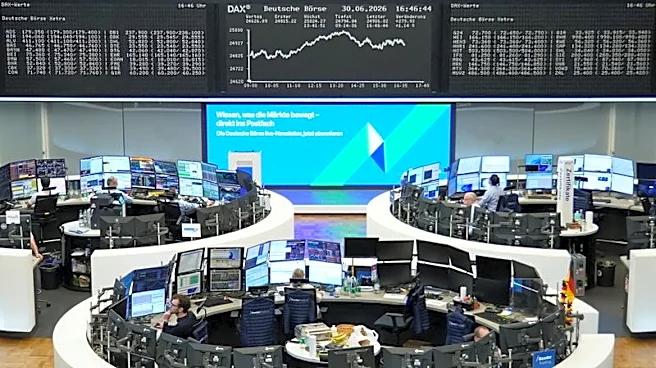
payroll gains for the previous two months revised downward. The unemployment rate fell to 4.2% from 4.3% in May, attributed to a decrease in labor force participation, which hit its lowest level in over five years. This tepid jobs report has led to a reassessment of the likelihood of a rate hike, with Fed funds futures now indicating a 46.8% probability that the Federal Reserve will maintain current rates at its September meeting. The news has positively impacted global markets, with Europe's STOXX 600 index reaching a record high and the MSCI's broadest index of world shares rising by 0.4%.
Why It's Important?
The cooling of the U.S. labor market and the subsequent easing of rate hike fears have significant implications for global financial markets and economic policy. A potential pause in rate hikes by the Federal Reserve could stabilize borrowing costs, encouraging investment and spending. This development is particularly crucial for sectors sensitive to interest rates, such as real estate and consumer goods. Additionally, the positive response in global stock markets reflects investor optimism, which could lead to increased capital flows and economic growth. However, the situation also underscores ongoing concerns about inflation and global supply chain disruptions, particularly in light of geopolitical tensions affecting shipping routes.
What's Next?
Looking ahead, market participants will closely monitor upcoming economic data releases and Federal Reserve communications for further insights into monetary policy direction. The Fed's next meeting in September will be pivotal, as it will provide more clarity on the central bank's stance regarding interest rates. Additionally, geopolitical developments, such as the situation in the Hormuz Strait, will continue to influence global economic conditions and market dynamics. Investors and policymakers alike will need to navigate these uncertainties while balancing growth and inflationary pressures.