



What's Happening?
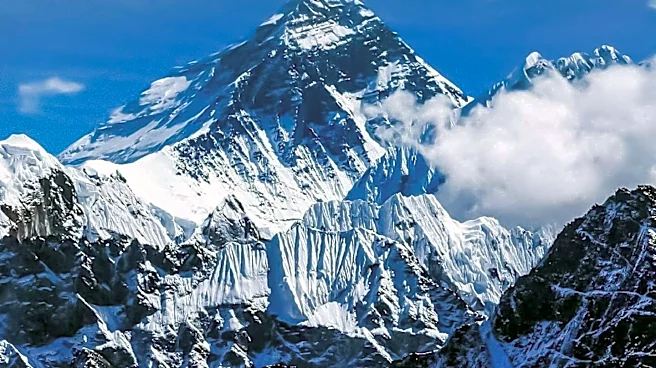
The documentary 'Everest: The Other Side,' directed by Elizabeth Chai Vasarhelyi and Jimmy Chin, is under review, focusing on mountaineer Jim Morrison and his late partner Hilaree Nelson's shared dream of ski-mountaineering Everest. The film, from the directors
of 'Free Solo,' chronicles Morrison's eventual ascent and descent, but is significantly overshadowed by the tragic death of Nelson during the expedition. Nelson died on September 26, 2022, after being caught in a small avalanche and falling nearly 6,000 feet while skiing in Nepal. The review notes that the film presents Nelson's death as a 'twist,' despite her being a vibrant subject in the initial stages of the documentary. The narrative then shifts to Morrison's determination to complete the quest as a tribute, raising questions about the film's handling of the tragedy and the broader ethics of extreme sports.
Why It's Important?
This documentary and its reception are important as they spark a broader conversation about the ethics of extreme sports filmmaking, particularly when tragedy strikes. The film's approach to Hilaree Nelson's death, presenting it as a narrative twist, raises questions about journalistic responsibility and sensitivity in documenting high-risk endeavors. It highlights the tension between celebrating human achievement in extreme sports and acknowledging the inherent dangers and personal costs involved. For viewers, it prompts reflection on the motivations behind such perilous feats and whether the pursuit of 'firsts' justifies the risks. The film also touches upon the personal sacrifices made by athletes, such as Nelson's struggle to balance maternal obligations with her passion, adding a layer of human complexity to the extreme sports narrative. The critical reception of 'Everest: The Other Side' could influence future documentary filmmaking practices in this genre, encouraging a more introspective and ethically conscious approach to stories involving significant risk and loss.
What's Next?
The critical discussion surrounding 'Everest: The Other Side' is likely to continue, influencing how similar extreme sports documentaries are produced and received. Filmmakers in this genre may face increased scrutiny regarding their narrative choices, particularly when dealing with the deaths of subjects. The film's release could also lead to more public discourse on the societal value and ethical implications of extreme sports, prompting athletes, sponsors, and media outlets to re-evaluate how these activities are portrayed. Furthermore, the film's exploration of personal grief and the drive to honor lost partners through continued pursuit of shared goals may resonate with audiences, potentially inspiring further works that delve into the psychological and emotional dimensions of high-stakes adventures. The ongoing conversation will likely shape audience expectations for authenticity and sensitivity in documentary storytelling.
Beyond the Headlines
Beyond the immediate narrative of the film, 'Everest: The Other Side' delves into profound ethical and philosophical questions surrounding human ambition, risk-taking, and the media's role in portraying these pursuits. The film implicitly questions the 'because it's there' mentality often associated with mountaineering, especially when it leads to tragic outcomes. It highlights the complex interplay between personal fulfillment, the drive for achievement, and the responsibilities individuals have to their families and loved ones. The documentary also touches on the often-unseen contributions and risks taken by support teams, such as the sherpas, whose voices are noted as being largely sidelined in the film. This raises broader questions about whose stories are prioritized and how narratives are constructed in the context of extreme expeditions. The film's critical reception could contribute to a cultural shift in how society views and valorizes extreme sports, moving towards a more nuanced understanding that acknowledges both the triumphs and the profound human costs.