



What's Happening?
Actress Susan Sarandon stated at the Venice Film Festival that she has experienced the loss of film roles due to her public support for Palestine. She indicated that agencies have advised against hiring her, attributing this to the 'power structure' within
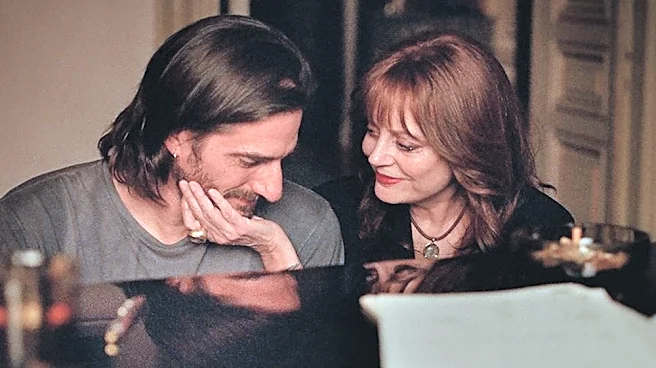
the entertainment industry. Sarandon believes that while the general public's understanding of the conflict has shifted, strong opposing views held by Zionists within her industry have not softened towards her. She made these remarks while promoting her new Italian film, 'The Echo Chamber,' and thanked its director, Andrea Pallaoro, for not heeding warnings against casting her. This follows an incident in November 2023 where Sarandon made controversial comments at a pro-Palestinian rally in New York City, suggesting that Jewish Americans were 'getting a taste of what it feels like to be a Muslim in this country.' She was subsequently dropped by her talent agency, United Talent Agency, and later issued an apology for her phrasing.
Why It's Important?
Sarandon's claims highlight the significant professional repercussions that public figures in the U.S. entertainment industry can face for expressing strong political views, particularly on sensitive international conflicts like the Israeli-Palestinian issue. This situation underscores the ongoing tension between freedom of speech and potential career impacts in Hollywood, where political stances can lead to blacklisting or reduced opportunities. It also brings to light the influence of various advocacy groups and their ability to affect casting and production decisions. For American audiences, this raises questions about the diversity of voices and perspectives allowed in mainstream media and the potential for self-censorship among artists. The incident reflects a broader societal debate in the U.S. regarding the boundaries of political expression and its consequences in professional spheres, particularly when such expressions are perceived as controversial or offensive by certain groups.
What's Next?
Sarandon's comments are likely to reignite discussions within the entertainment industry and among the public regarding the treatment of artists who take political stances. While she is currently promoting 'The Echo Chamber,' her future career trajectory in U.S. productions may continue to be impacted by these events. The ongoing debate about the Israeli-Palestinian conflict ensures that this issue remains a sensitive topic, and public figures' comments will continue to be scrutinized. It remains to be seen if other actors or industry professionals will publicly support Sarandon or if her experience will serve as a cautionary tale. The incident could also prompt further examination of the role of talent agencies and production companies in navigating artists' political expressions and the pressures they face from various stakeholders.
Beyond the Headlines
This situation delves into the complex interplay of celebrity, activism, and industry politics. Sarandon's experience reflects a broader cultural phenomenon where public figures are increasingly expected to take stances on social and political issues, yet face severe backlash when those stances are deemed controversial. It highlights the power dynamics within Hollywood, where economic interests and political sensitivities often intersect, potentially limiting artistic freedom. The incident also touches upon the historical context of blacklisting in the entertainment industry, albeit in a modern form driven by public opinion and social media. It prompts a deeper reflection on the responsibilities of public figures, the impact of their words, and the industry's role in fostering or stifling diverse viewpoints, particularly on issues with deep historical and emotional resonance.