



What's Happening?
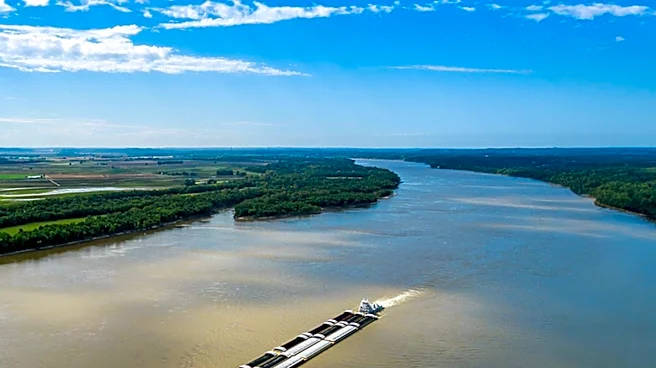
A new report from CoBank indicates that the U.S. inland waterway system is experiencing a structural tightening due to a shrinking barge fleet, which poses significant risks to grain transportation and the broader agricultural economy. The U.S. barge fleet has
decreased to 19,668 vessels in 2026, a 7.6% reduction over the past decade. Concurrently, the average age of barges has risen to 17.6 years, up from 13.8 years in 2016, while the typical lifespan is 25 to 30 years. Annually, between 500 and 1,000 barges are retired, but only about 410 new ones are built. This trend suggests the fleet could shrink by 17.4% to 16,240 barges by 2035. Factors contributing to this decline include aging vessels, escalating construction costs—with new hopper barges now costing around $1 million, up from $650,000 a decade ago—and persistent low-water conditions on the Mississippi River. Without substantial investment in fleet replacement and waterway infrastructure, higher transportation costs are anticipated, which could negatively impact farm margins, grain basis levels, and U.S. export competitiveness.
Why It's Important?
The shrinking U.S. barge fleet has critical implications for the nation's agricultural sector and its global trade position. The Mississippi River system is vital, moving approximately half of all U.S. corn and soybean exports and one-third of wheat exports. Increased transportation costs due to tighter barge availability will likely lead to higher freight rates and weaker grain basis levels for farmers, as elevators will bid less aggressively for grain when more of the export value is consumed by shipping expenses. This situation could also delay grain movement, forcing more grain into storage and widening basis and carries, ultimately deferring grain shipments. The U.S. Department of Agriculture projects a 9% rise in U.S. grain and oilseed exports by 2035, primarily from corn and soybeans, which will further strain the already constrained barge system. The inability of the rail system to fully absorb displaced barge volumes due to equipment constraints and terminal bottlenecks underscores the indispensable role of barges in efficient bulk commodity transport.
What's Next?
The ongoing decline in the U.S. barge fleet suggests a future of sustained higher transportation costs for agricultural goods. CoBank warns that freight values are already above historical norms, even during traditionally off-peak seasons, indicating a persistent challenge for U.S. grain exports. While the recently proposed Water Resources Development Act of 2026, which allocates over $6 billion for ports, waterways, and related infrastructure, could offer some relief by improving system reliability and accelerating critical upgrades, its enactment and impact remain to be seen. Barge operators currently price services based on older, depreciated vessels, and current freight rates have not risen sufficiently to justify large-scale fleet replacement. This means the industry's investment strategy will likely continue to focus on extending the life of existing assets rather than expanding the fleet, exacerbating the problem. Stakeholders, including farmers, grain exporters, and policymakers, will need to address these structural issues to maintain the competitiveness of U.S. agricultural exports.
Beyond the Headlines
The shrinking barge fleet highlights a broader issue of aging infrastructure and underinvestment in critical transportation networks across the United States. The reliance on older, fully depreciated assets by barge operators, coupled with rising new construction costs, creates a cycle where fleet renewal is economically challenging despite growing demand. This situation could lead to long-term shifts in agricultural supply chains, potentially encouraging more localized production or alternative, less efficient transportation methods if river transport becomes prohibitively expensive or unreliable. Furthermore, the recurring low-water events on the Mississippi River, possibly linked to climate patterns, add another layer of vulnerability to the system, suggesting that environmental factors are increasingly intertwined with economic infrastructure. The long-term viability of the U.S. as a major agricultural exporter hinges not only on production capacity but also on the robustness and efficiency of its entire logistics chain, making the barge fleet's decline a bellwether for broader economic and environmental challenges.