





What's Happening?
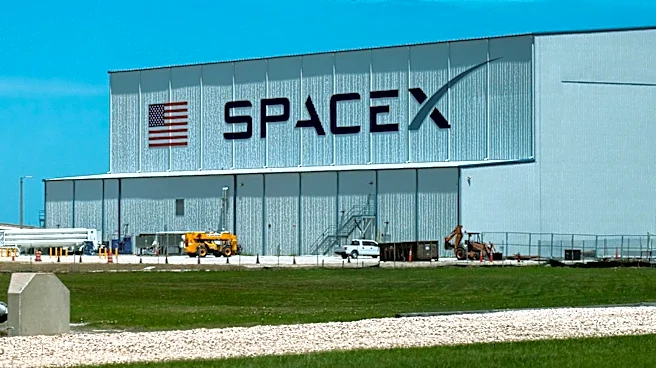
SpaceX's initial public offering (IPO) has made history by raising $75 billion, marking it as the largest IPO ever. The company, known for its ambitious space ventures, offered shares at $135 each. Notably, SpaceX allocated a significant portion of shares to retail
investors, initially targeting 30% but later reducing it to the low 20% range due to high institutional demand. Despite initial excitement and a surge in stock price, the shares have returned to near the IPO price. The company's valuation at the time of the IPO was close to $1.77 trillion, supported by its diverse business operations, including Starlink and AI initiatives.
Why It's Important?
The SpaceX IPO is a landmark event in the financial markets, highlighting the growing interest in space technology and the potential for retail investors to participate in high-profile offerings. The large allocation to retail investors is unusual and reflects a shift towards more inclusive investment opportunities. However, the volatility in SpaceX's stock price underscores the risks associated with investing in newly public companies. The company's long-term success will depend on its ability to execute its business strategies and achieve profitability, which will be closely monitored by investors and analysts.
What's Next?
For SpaceX, the focus will now shift to delivering on its business promises and maintaining investor confidence. Upcoming financial reports will be critical in assessing the company's performance and growth trajectory. Investors will be particularly interested in SpaceX's revenue growth, spending on new initiatives, and progress towards profitability. The company's ability to sustain its valuation and meet market expectations will be key to its long-term success.