



What's Happening?
Tesla CEO Elon Musk has predicted that the world could see as many as 100 billion humanoid robots within the next 20 years, a figure significantly exceeding the projected human population. In an interview with China’s state broadcaster CCTV, Musk elaborated
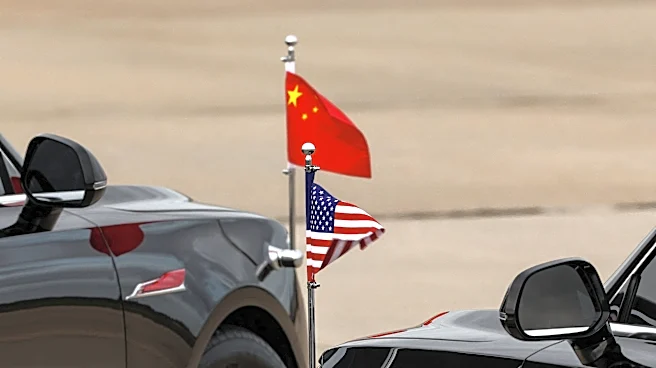
on earlier comments made at the G20 Innovation Ministerial Summit, where he suggested there could be over 1 billion humanoid robots within a decade. He envisions a future where these robots could perform tasks such as caring for elderly relatives, watching children, providing tutoring, and handling household and workplace duties. Musk also praised China's advancements in humanoid robotics, encouraging visits to Shanghai and Beijing. Chinese companies are rapidly moving from prototypes to manufacturing, with XPeng planning mass production of its IRON humanoid robot by late 2026 and deliveries in 2027. However, concerns exist regarding the realism of industry valuations and production plans, with Chinese regulators reportedly slowing stock-market listings for humanoid robotics companies.
Why It's Important?
Elon Musk's prediction highlights a potentially transformative shift in global labor and society, driven by advancements in artificial intelligence and robotics. If realized, a massive influx of humanoid robots could dramatically alter economic structures, potentially leading to 'one-person companies' where individuals manage vast numbers of robots and AI agents, significantly boosting individual productivity. This development could address labor shortages, particularly in caregiving and manufacturing, but also raises questions about job displacement and the future of human employment. China's rapid progress in this sector, acknowledged by Musk, positions it as a key player in shaping this future, potentially giving it a significant economic and technological advantage. However, the reported concerns from Chinese regulators about industry valuations and the current capabilities of these robots suggest that the path to widespread adoption and commercial viability is still fraught with challenges.
What's Next?
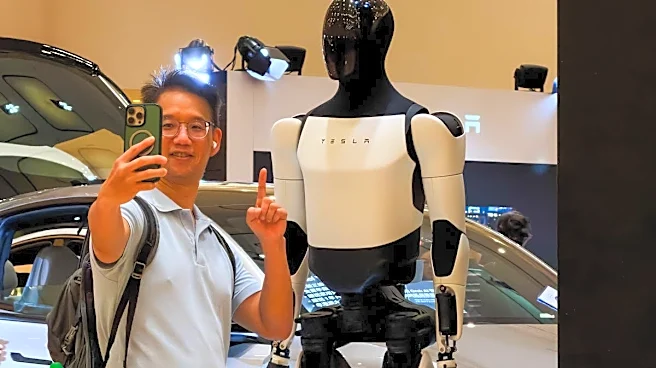
The immediate future will likely involve continued rapid development and manufacturing efforts in the humanoid robotics sector, particularly in China. Companies like XPeng are moving towards mass production, with Tesla also reportedly auditing Chinese suppliers for its Optimus robot. However, the industry faces significant hurdles, including improving robot dexterity, autonomy in unpredictable environments, and the overall cost-effectiveness of mass production. Regulatory scrutiny, as seen in China, may increase to ensure sustainable growth and prevent speculative bubbles. The coming years will be crucial in determining whether the industry can overcome these technical and commercial challenges to scale production and integrate humanoid robots into daily life and various industries. The competition between nations and companies in this space will intensify, driving innovation but also raising questions about ethical deployment and societal impact.
Beyond the Headlines
The vision of billions of humanoid robots raises profound ethical, social, and economic questions. The potential for widespread automation could lead to a redefinition of work, leisure, and human purpose. Issues such as the equitable distribution of wealth generated by robot labor, the psychological impact of human-robot interaction, and the potential for job displacement will become central societal debates. Furthermore, the concentration of advanced robotics technology in certain nations, like China, could shift geopolitical power dynamics. The development of highly capable humanoid robots also brings forth discussions about AI safety, control, and the potential for these systems to operate autonomously in complex environments. The transition to a robot-augmented society will require careful consideration of these multifaceted implications to ensure a beneficial and equitable future.