


What's Happening?
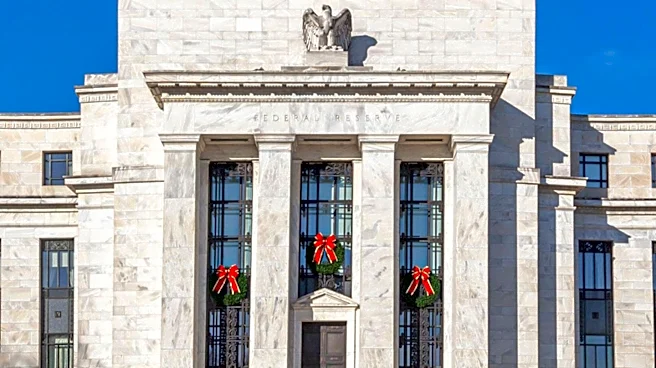
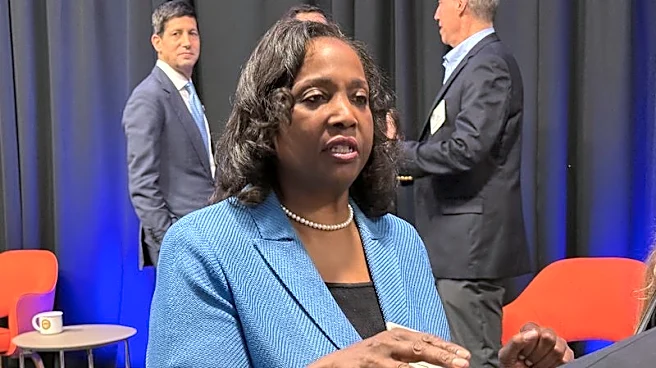
Federal Reserve Governor Lisa Cook has expressed significant concern regarding the current inflation levels, stating that the existing policy rate is insufficient to address the issue. Speaking at the Central Bank of Chile’s annual conference in Santiago,
Cook highlighted that inflation has remained above the Fed's 2% target for over five and a half years with minimal evidence of decline. She dissented at the October Federal Open Market Committee (FOMC) meeting, advocating for a quarter-point rate hike instead of maintaining the current rates. Cook argued that financial conditions are too accommodative, failing to curb inflation effectively, and warned that delaying further rate increases could necessitate larger hikes in the future, potentially increasing stress on the financial system and negatively impacting American households. Her remarks contributed to a market selloff, affecting both stock and crypto markets.
Why It's Important?
Governor Cook's stance underscores a hawkish perspective within the Federal Reserve, signaling a potential for more aggressive monetary policy tightening than currently anticipated by some market participants. Her emphasis on the prolonged period of above-target inflation and the perceived looseness of financial conditions suggests that the Fed might prioritize inflation control even at the risk of impacting economic growth. This approach could lead to higher borrowing costs for businesses and consumers, potentially slowing down investment and spending. The market's reaction to her comments, including a stock selloff and a drop in Bitcoin prices, illustrates the sensitivity of financial markets to signals about future interest rate movements. If the Fed adopts a more aggressive hiking path, it could influence corporate earnings, employment rates, and overall economic stability in the U.S.
What's Next?
The financial markets are broadly anticipating a Federal Reserve rate hike at the upcoming December 8-9 meeting, with CME FedWatch indicating an 88.6% probability of an increase. Traders will closely monitor the October inflation data on Personal Consumption Expenditures (PCE), the Fed's preferred price gauge, which is scheduled for release on November 25. A higher-than-expected PCE reading, potentially around Cook's estimated 3.8%, would likely strengthen the case for further rate hikes and could lead to increased market volatility. Conversely, a cooling inflation report might provide some relief and support arguments for a pause in rate increases. The Federal Reserve's future actions will depend heavily on incoming economic data, particularly inflation figures and employment reports, as policymakers weigh the need to combat inflation against the risks of an economic downturn.
Beyond the Headlines
The debate within the Federal Reserve, exemplified by Governor Cook's dissent, highlights a critical tension in monetary policy: the balance between controlling inflation and supporting economic growth. Cook's argument that waiting carries a cost—potentially requiring larger, more disruptive hikes later—reflects a concern about the Fed falling 'behind the curve.' This perspective suggests a belief that prolonged high inflation could become entrenched, leading to higher inflation expectations among price- and wage-setters, which would make it even harder to bring inflation back to target. The implications extend beyond immediate economic indicators, touching upon the Fed's credibility and its ability to manage long-term price stability. The ongoing discussion among Fed officials about the appropriate pace and magnitude of rate adjustments will shape not only the short-term economic outlook but also the long-term trajectory of the U.S. economy.