



What's Happening?
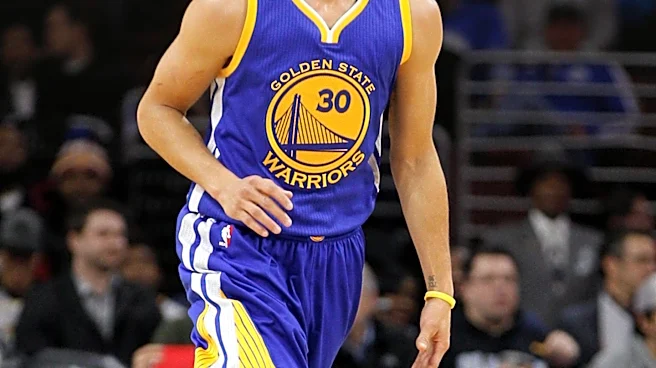
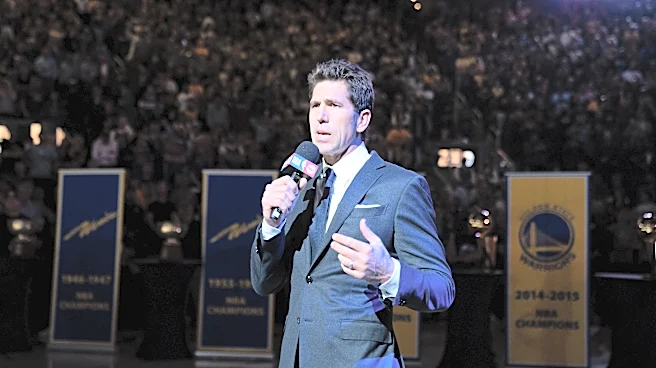
Golden State Warriors General Manager Mike Dunleavy Jr. has addressed the ongoing discussions surrounding Stephen Curry's contract extension and recent trade speculation. Curry is eligible to sign a two-year, $136.7 million extension through June 30 or wait
until 2027 free agency for a potential three-year, $212.9 million contract. Dunleavy Jr. expressed confidence that Curry would finish his career with the Warriors, stating that the team would offer their star 'whatever he wants.' However, he also acknowledged that if Curry were to request a trade, the organization would 'talk it through,' a comment that fueled further speculation. Warriors owner Joe Lacob has since dismissed the trade chatter as 'clickbait,' reaffirming the organization's stance that neither Curry would want to leave nor would the team trade him. Curry himself has consistently expressed his desire to retire as a Warrior.
Why It's Important?
Stephen Curry's decision on his contract extension is pivotal for the Golden State Warriors' future trajectory and financial flexibility. Signing an extension now would secure Curry's presence but could limit the team's ability to make significant roster changes due to salary cap constraints. Conversely, if Curry waits, it could provide the Warriors with substantial cap space in the future, allowing them to build a more competitive roster around him for his final years. This decision directly impacts the team's championship aspirations and its ability to maximize the remaining prime years of its franchise player. The ongoing speculation, despite reassurances from team management, highlights the intense scrutiny and pressure on star players and their teams in the NBA, where every contract decision and public statement can have far-reaching implications for team dynamics and fan expectations.
What's Next?
Stephen Curry faces a critical decision regarding his contract extension, which he can sign anytime between now and June 30, or defer until 2027 free agency. The timing of his decision will significantly influence the Warriors' offseason strategies and long-term planning. While the team has publicly stated its willingness to meet Curry's demands, the financial implications of his choice will dictate the team's flexibility in acquiring new talent. The Warriors are expected to continue their efforts to build a championship-contending roster, with or without immediate cap flexibility, to ensure Curry finishes his career in a competitive environment. The situation will likely remain a prominent topic of discussion among NBA analysts and fans until a decision is made.
Beyond the Headlines
This situation transcends a simple contract negotiation; it delves into the legacy of a generational player and the strategic challenges faced by a successful NBA franchise. Curry's decision is not just about personal finances but also about his commitment to the team's future and his desire to compete for more championships. The 'over 38 rule' in NBA contracts adds another layer of complexity, limiting the length of extensions for older players and influencing strategic choices. The public discourse, fueled by comments from team management and former players, underscores the constant pressure on NBA organizations to balance loyalty to star players with the need for sustained competitiveness. This scenario highlights the intricate interplay of player agency, team management, and financial regulations in shaping the landscape of professional sports.