




What's Happening?
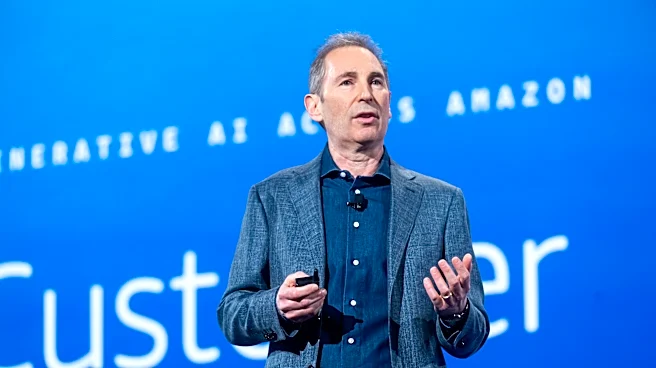
Amazon reported $5.7 billion in physical store net sales for the third quarter of 2026, marking a 2% increase year-over-year. Despite this modest growth in physical stores, Amazon CEO Andy Jassy emphasized the broader progress of the company's retail
business, noting that units grew nearly 15% year-to-date on a base of over 30 billion items sold last year. He highlighted that Amazon added more than $90 billion in gross sales over the trailing 12 months and is growing at a significant pace with double-digit operating margins when advertising revenue is included. Groceries and everyday essentials accounted for approximately half of the units sold in Q3, growing about three times faster than other categories. This indicates that Amazon's grocery push is primarily driven by delivery services rather than physical store expansion. The company's fastest third quarter yet saw over 1.5 billion items delivered to Prime members same-day or overnight, and orders through its ultra-fast delivery service, Amazon Now, increased tenfold year-over-year.
Why It's Important?
The reported physical store sales, while growing, represent a small fraction of Amazon's overall retail strategy, which is heavily skewed towards online and delivery services. This trend is significant for the U.S. retail landscape, as it highlights the continued shift from traditional brick-and-mortar shopping to e-commerce and rapid delivery models. For grocery chains and mass merchants, Amazon's emphasis on delivery for essentials poses a direct competitive threat, potentially forcing them to accelerate their own online and delivery capabilities. The strong growth in online units sold and rapid delivery services underscores Amazon's ability to capture market share by prioritizing convenience and speed. The company's overall retail business, including advertising, is demonstrating robust operating margins, indicating a successful integration of various revenue streams. However, the relatively slow growth in physical stores suggests that Amazon's strategy is not to compete head-on with traditional retailers in terms of physical footprint, but rather to leverage its logistical prowess to dominate the online and delivery segments.
What's Next?
Amazon is continuing to reshape its physical retail footprint, including plans to convert some Amazon Go and Amazon Fresh locations into Whole Foods Markets. This suggests a strategic consolidation and refinement of its physical store formats, potentially aiming for greater efficiency and brand alignment. The company is also reportedly experimenting with a big-box format in the Chicago suburbs, indicating a willingness to explore new physical retail models, though the business model for this remains unclear. The ongoing investment in its fulfillment network and ultra-fast delivery services will remain a priority to support the growth of its online retail and grocery segments. Competitors, such as Target and Walmart, have already shown they can attract traffic during Amazon's key sales events like Prime Day, suggesting that the competitive landscape will continue to evolve with both online and in-store promotions. The U.S. Census Bureau's upcoming Quarterly E-commerce Sales release will provide further data on the overall shift towards online shopping.
Beyond the Headlines
Amazon's retail strategy, as evidenced by its Q3 results, reflects a sophisticated approach to market dominance that integrates online convenience with strategic physical presence. The company's ability to drive significant growth in groceries and everyday essentials through delivery services highlights a fundamental change in consumer behavior and expectations. This shift has broader implications for urban logistics, last-mile delivery infrastructure, and the future of retail employment. The integration of advertising revenue into the overall retail margin demonstrates how Amazon is monetizing every aspect of its ecosystem, creating a powerful flywheel effect. The modest growth in physical stores, contrasted with the rapid expansion of online services, suggests that the role of physical retail for Amazon might be more about brand presence, customer acquisition, and serving as local hubs for delivery, rather than being primary sales channels. This hybrid approach could redefine the future of retail, where physical and digital experiences are seamlessly integrated to meet evolving consumer demands.