

What's Happening?
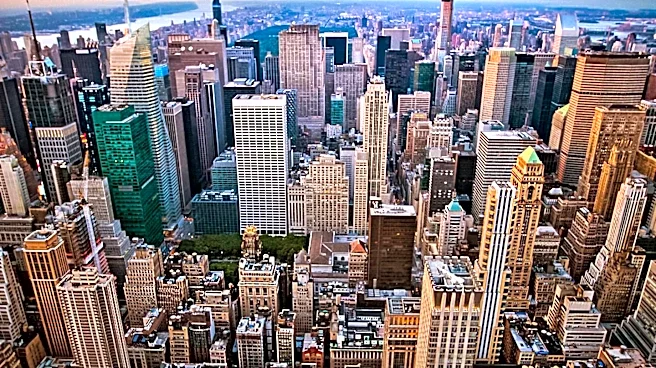
The 646 area code, introduced in Manhattan on July 1, 1999, as the first overlay to the original 212 area code, has developed a cultural stigma. Despite covering the same geographical area as 212 and the later 332 overlay, 646 is often perceived as less
desirable. This perception was notably highlighted in a 1998 'Seinfeld' episode, which aired before 646 was even active, where a character's date was jeopardized by having a 646 number. The New York Times and Wall Street Journal have also commented on the prestige of the 212 code, with the latter comparing it to a rent-controlled apartment. Azealia Banks' 2011 hit single '212' further cemented the cultural significance of the original area code, while 646 lacks a similar cultural anthem. The supply of 212 numbers has been depleted since 2009-2010, meaning new Manhattan residents or businesses are typically assigned 646 or 332 numbers.
Why It's Important?
The cultural hierarchy between Manhattan's area codes reflects a unique aspect of urban identity and status in the U.S. The perceived value of a 212 number, leading some individuals and businesses to pay significant amounts to acquire one, underscores how seemingly minor details can influence professional and social standing. Law firms and hedge funds, for instance, reportedly seek 212 numbers for the 'credibility' and 'established status' they convey, viewing newer codes like 646 or 929 as indicative of a 'relatively new business.' This phenomenon highlights the power of branding and historical association, even in something as mundane as a phone number. It also illustrates how consumer behavior can be driven by intangible cultural capital, creating a secondary market for older, more prestigious identifiers.
What's Next?
As the original 212 numbers remain largely depleted, the cultural perception of 646 and 332 will likely continue to evolve. The demand for legacy 212 numbers is expected to persist, potentially fueling the resale market for these coveted digits. Businesses and individuals moving to Manhattan will increasingly be assigned the newer area codes, which may eventually lead to a normalization of 646 and 332 as the primary identifiers for the borough. However, the deeply ingrained cultural narrative, reinforced by popular media and historical prestige, suggests that the 'status' associated with 212 will likely endure for the foreseeable future, maintaining a subtle but present social stratification among Manhattan phone numbers.
Beyond the Headlines
This situation delves into the broader sociological concept of 'cultural capital' and how it manifests in unexpected ways within urban environments. The preference for a 212 area code over 646 is not based on functional difference but on symbolic value, reflecting a desire for authenticity and connection to a perceived 'original' New York identity. This phenomenon can be seen as a micro-example of how historical precedence and media representation can shape collective perceptions and create social hierarchies, even for something as utilitarian as a phone number. It also touches upon the psychological aspect of consumer choice, where individuals are willing to invest in symbols that project a desired image or status, highlighting the non-economic factors that influence market dynamics.