


What's Happening?
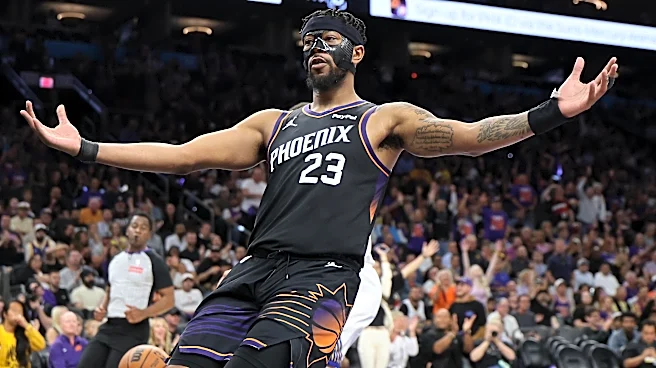
The Phoenix Suns have re-signed Haywood Highsmith, a veteran defensive specialist, less than a week after waiving him. Highsmith was initially owed $1 million on a contract that would have become fully guaranteed for $3 million by January 10, 2027. After
being waived, Highsmith cleared waivers, indicating no other team offered him a fully guaranteed contract, especially given his recent injury history, including meniscus surgery that sidelined him for most of the last season. The Suns' decision to waive and then re-sign Highsmith is believed to be a strategic move to gain additional financial flexibility. While the exact details of the new contract are not yet official, it is assumed to be fully non-guaranteed, which would prevent the Suns from incurring further financial loss if Highsmith does not make the regular-season roster. This maneuver allows the team to potentially avoid committing the full $3 million if Highsmith doesn't reach the guarantee date, while still retaining a player they value for his defensive skills and three-point shooting.
Why It's Important?
This transaction highlights a growing trend in NBA team management where franchises are actively seeking ways to optimize their salary cap and maintain financial flexibility, especially under stringent collective bargaining agreement rules. For the Phoenix Suns, a team that has faced scrutiny for past fiscal decisions, this move demonstrates a more responsible and strategic approach to roster construction. By waiving Highsmith and then re-signing him to a potentially non-guaranteed deal, the Suns mitigate financial risk while still retaining a player who fits their organizational and skill-set needs. This approach allows them to evaluate Highsmith's physical recovery and performance without the immediate burden of a guaranteed contract, which is crucial for a player returning from a significant injury. It also sets a precedent for how teams can manage depth pieces, giving players an opportunity to test the market while allowing the team to restructure contracts for better cap management. This strategy is particularly important for teams operating near or above the salary cap, as every dollar saved can provide crucial flexibility for future moves.
What's Next?
The immediate next step involves the official announcement of Highsmith's new contract details, which will clarify the financial structure and guarantee status. It is anticipated that the new deal will be fully non-guaranteed, potentially functioning as an Exhibit 9 contract, essentially a training camp invite. This would allow the Suns to assess Highsmith's physical condition and performance during training camp without a long-term financial commitment. If this is the case, Highsmith will need to demonstrate his return to full NBA shape and rebuild his value to secure a spot on the regular-season roster. This could lead to a competition for a roster spot, possibly against other players with non-guaranteed contracts like Jamaree Bouyea. The Suns may also choose to enter the season with an open roster spot, providing further flexibility for potential mid-season acquisitions or adjustments. The outcome of this re-signing will influence the Suns' depth chart, particularly in defensive roles and three-point shooting, and will be closely watched by other teams as a model for cap-conscious roster management.
Beyond the Headlines
This strategic re-signing of Haywood Highsmith by the Phoenix Suns delves deeper into the intricate financial and human aspects of professional sports. Beyond the immediate cap savings, it underscores the delicate balance between player value, injury risk, and team financial health. For Highsmith, clearing waivers after being cut highlights the harsh realities of the NBA market, where even skilled players returning from injury may find limited guaranteed opportunities. It also reveals the psychological impact on players who must prove their worth repeatedly, especially after a significant setback like meniscus surgery. From the team's perspective, this move reflects a sophisticated understanding of contract mechanics and risk management, prioritizing optionality in a league where every dollar and roster spot is critical. It also subtly communicates a message to the league about the Suns' commitment to fiscal responsibility, a shift from past practices. This situation could also spark discussions about player security and the nature of non-guaranteed contracts, particularly for players recovering from injuries, and how these mechanisms shape player movement and team loyalty in the long run.