







What's Happening?
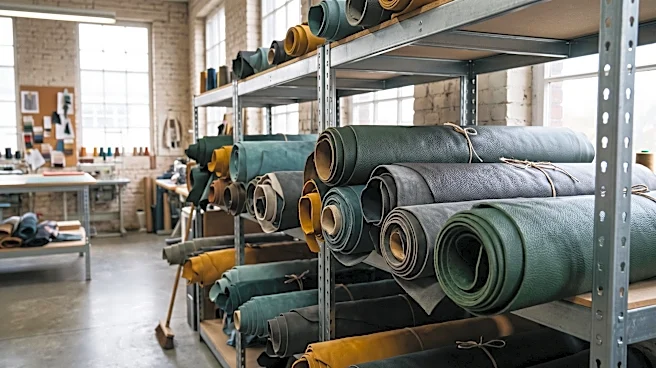
U.S.-based Tapestry, a prominent fashion company, has significantly increased its investment in Gen Phoenix, a company specializing in recycled leather. This move is part of a broader trend within the apparel industry to adopt more sustainable practices
and materials. The fashion sector is facing increasing pressure to address its environmental impact, with many brands exploring alternatives to traditional materials like virgin leather. Other companies are also making strides in this area; for instance, Copenhagen-based GANNI eliminated virgin leather products from its inventory in 2024, and luxury conglomerate Kering has committed to reducing its reliance on leather by 30% by 2028, aiming for next-generation leather alternatives to constitute up to 40% of its materials by 2035. These initiatives highlight a growing industry-wide effort to innovate and invest in sustainable solutions to mitigate climate change and environmental degradation.
Why It's Important?
Tapestry's increased investment in Gen Phoenix signals a strategic shift towards sustainability within the U.S. fashion industry, reflecting a growing consumer demand for eco-friendly products and responsible corporate practices. This move could influence other U.S. apparel companies to follow suit, accelerating the adoption of recycled and alternative materials. The investment also supports the development of innovative technologies in material science, potentially creating new markets and job opportunities within the green economy. For consumers, it means a wider availability of products with a reduced environmental footprint. Furthermore, as global regulations, such as those pending in the E.U., push for higher circular material use rates and stricter environmental standards, U.S. companies that proactively invest in sustainability will be better positioned to compete in international markets and meet future compliance requirements.
What's Next?
The increased investment by Tapestry is likely to spur further innovation and expansion for Gen Phoenix, potentially leading to wider adoption of its recycled leather in various product lines across Tapestry's brands and possibly other fashion houses. This could also encourage more collaborations between established fashion companies and material science startups focused on sustainability. We may see a continued trend of fashion brands setting ambitious targets for reducing their reliance on virgin materials and increasing their use of recycled or bio-based alternatives. Additionally, as consumer awareness and demand for sustainable fashion grow, there could be increased pressure on policymakers to introduce incentives or regulations that support the development and use of eco-friendly materials within the U.S. apparel industry, mirroring efforts seen in Europe.
Beyond the Headlines
Tapestry's investment in recycled leather extends beyond immediate environmental benefits; it represents a deeper shift in corporate responsibility and brand strategy within the fashion industry. This move highlights a recognition that sustainability is not just a niche concern but a core component of long-term business viability and brand reputation. It also underscores the ethical dimension of material sourcing, moving away from practices that contribute to deforestation, pollution, and animal welfare concerns. The broader implication is a potential redefinition of luxury, where sustainability and ethical production become as valued as design and craftsmanship. This could lead to a cultural shift in consumer perception, where products made from recycled or alternative materials are seen as premium, driving a more circular economy and challenging the traditional linear model of production and consumption.