





What's Happening?
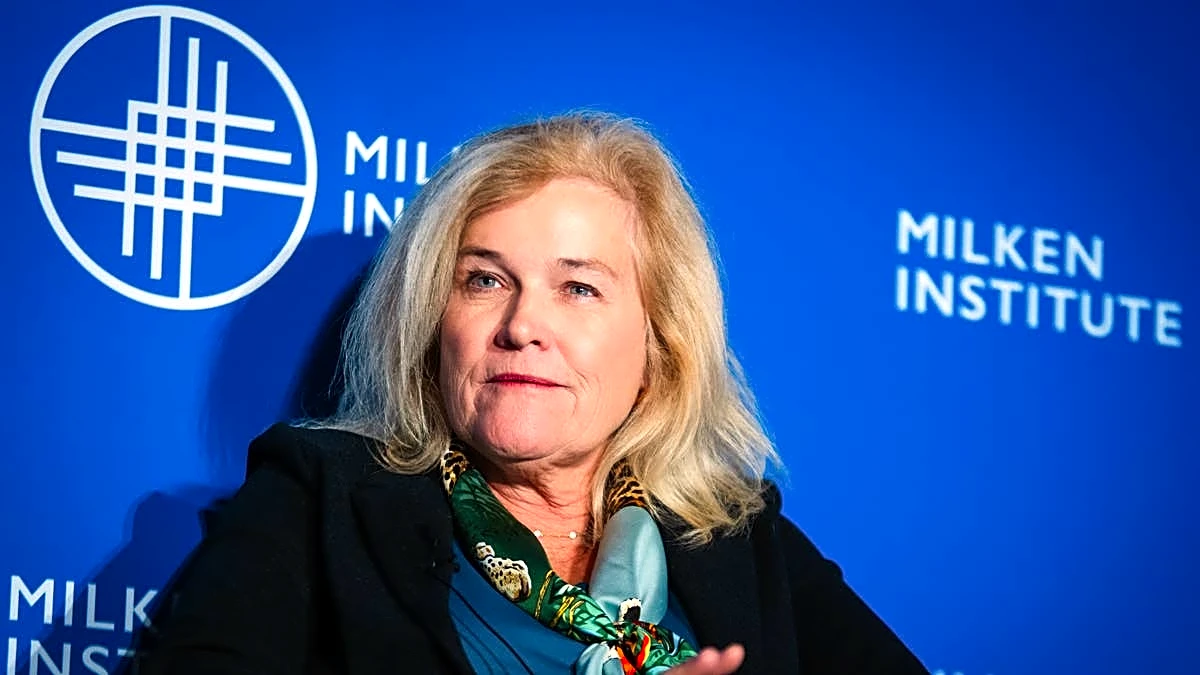
Reeve Collins, co-founder of Tether and chairman at WeFi, has highlighted Coinbase Global, Inc. (NASDAQ:COIN), Circle Internet Group, Inc. (NYSE:CRCL), and Robinhood Markets, Inc. (NASDAQ:HOOD) as three publicly traded companies poised to benefit from
the shift of financial services onto blockchain technology. Collins believes that the biggest beneficiaries of blockchain-based finance will be companies already positioned between consumers and their money, rather than those solely focused on building the underlying technology. He points to distinct advantages for each company: Circle issues USDC, a dollar-pegged stablecoin; Coinbase facilitates its distribution and earns income from it; and Robinhood possesses an established customer base that can be expanded into broader financial services. Collins's perspective emphasizes the potential for these companies to integrate various financial activities, such as holding money, investing, and borrowing, within a single application, thereby reducing the need for multiple intermediaries.
Why It's Important?
This assessment by a prominent figure in the blockchain space underscores a significant trend in the U.S. financial industry: the convergence of traditional finance with blockchain technology. The identified companies represent different facets of this evolution, from stablecoin issuance and distribution to broad financial service platforms. For investors, Collins's insights suggest that exposure to blockchain adoption can be gained through various avenues, including digital dollar issuance, distribution, and application control. The potential for financial services to become more integrated and efficient through blockchain could reshape how consumers manage their money, invest, and access credit. This shift could lead to increased competition among financial institutions and a re-evaluation of business models, as companies strive to capture a larger share of customers' financial lives within single, comprehensive applications.
What's Next?
The future trajectory for these companies will involve navigating the evolving landscape of blockchain integration and customer engagement. Investors will need to monitor whether stablecoin adoption translates into sustainable revenue streams for companies like Circle and Coinbase. For Robinhood, the challenge lies in expanding its existing customer relationships beyond brokerage accounts into a broader suite of financial services. The competitive advantage will increasingly depend on the ability to combine cash management, investing, borrowing, and payments within a single, user-friendly application. As financial services continue to converge within digital wallets and 'super apps,' companies will likely focus on building upon existing infrastructure while gradually replacing components that create friction, aiming to offer more seamless and integrated financial experiences to consumers.
Beyond the Headlines
The deeper implications of this trend extend to the fundamental structure of financial services and consumer behavior. The move towards fewer intermediaries and the use of assets as collateral without inter-institutional transfers could lead to a more democratized and accessible financial system. This shift also raises questions about data privacy, regulatory oversight, and the potential for new forms of financial risk. The long-term success of these blockchain-enabled financial models will depend on their ability to build trust, ensure security, and comply with evolving regulatory frameworks. Furthermore, the emphasis on integrated financial applications could foster a new era of 'financial super apps,' where a single platform caters to nearly all of a user's financial needs, potentially altering the competitive landscape for traditional banks and financial institutions.