
What's Happening?
Many independent and local grocery stores across New England are experiencing significant stock shortages due to an ongoing strike by truck drivers and warehouse workers at Associated Grocers Northeast
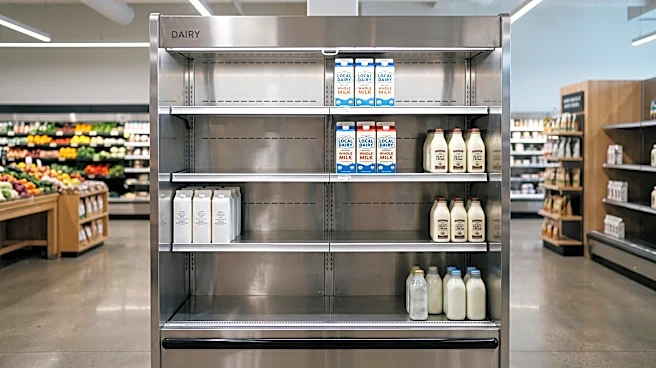
(AGNE). The strike, which began on October 17, stems from a dispute over employee pension plans. According to a union representative, AGNE withdrew from a pension plan and attempted to replace it with a 401(k) without a company match. This action has led to a disruption in the supply chain, leaving many grocery store shelves, particularly dairy and produce sections, nearly empty. For instance, Richardson's Market in Portsmouth, New Hampshire, reported that its dairy cooler was almost completely empty after missing a crucial weekly delivery from AGNE. The market typically receives thousands of dollars' worth of produce each Wednesday, and the lack of deliveries is causing considerable concern as the Thanksgiving holiday approaches.
Why It's Important?
The strike at Associated Grocers Northeast has significant implications for both local businesses and communities throughout New England. Independent grocery stores, which often rely heavily on AGNE for their supplies, are struggling to keep their shelves stocked, potentially leading to lost revenue and customer dissatisfaction. The timing of the strike, just weeks before Thanksgiving, exacerbates the problem, as this is a peak shopping period for groceries. Beyond the immediate business impact, the strike also affects local food pantries that depend on donations from these markets. For example, Richardson's Market noted that a local food pantry, which relies on weekly food deliveries from the market, is now facing food shortages. This highlights the broader societal impact of labor disputes on vulnerable populations and essential community services. The situation also underscores the critical role of supply chain workers in maintaining daily life and the ripple effects when their labor is withheld.
What's Next?
As the strike continues, the immediate next steps involve AGNE's efforts to maintain service and the ongoing negotiations between the company and the striking workers. AGNE has released a statement indicating that it has a contingency plan in place to ensure service continuity through the holiday season, aiming to meet customer and vendor expectations. However, the effectiveness of this plan remains to be seen as stores continue to report shortages. Local grocery stores like Richardson's Market are actively seeking alternative local suppliers to temporarily keep their shelves stocked, demonstrating a proactive approach to mitigate the strike's impact. The resolution of the pension dispute will be crucial for restoring normal supply operations. Continued disruptions could lead to higher prices for consumers if stores are forced to source from more expensive alternatives or if demand outstrips supply during the holiday period.
Beyond the Headlines
This labor dispute extends beyond immediate supply chain issues, touching upon broader themes of worker benefits, corporate responsibility, and the resilience of local economies. The core issue—the replacement of a pension plan with a non-matching 401(k)—reflects a national trend where companies seek to reduce long-term financial obligations to employees, often shifting more retirement risk onto individual workers. This situation could serve as a case study for other labor groups facing similar changes to their benefits packages, potentially influencing future union negotiations across various sectors. Furthermore, the reliance of local food pantries on grocery store donations highlights the interconnectedness of the commercial food system with community welfare. The strike exposes vulnerabilities in this system, prompting questions about how communities can build more resilient food networks that are less susceptible to single points of failure, whether due to labor disputes or other disruptions.