


What's Happening?
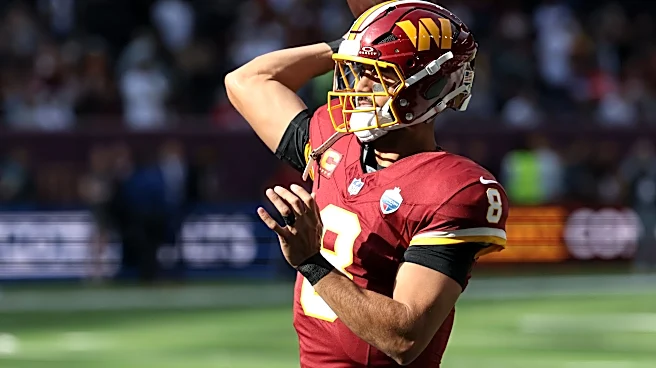
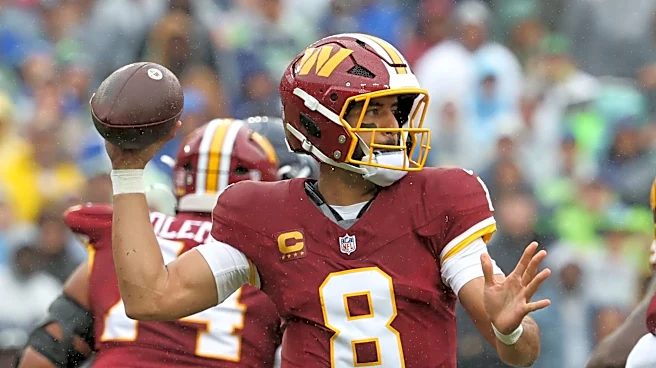
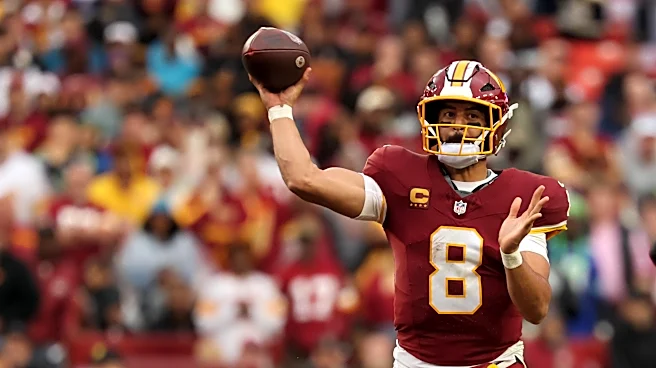
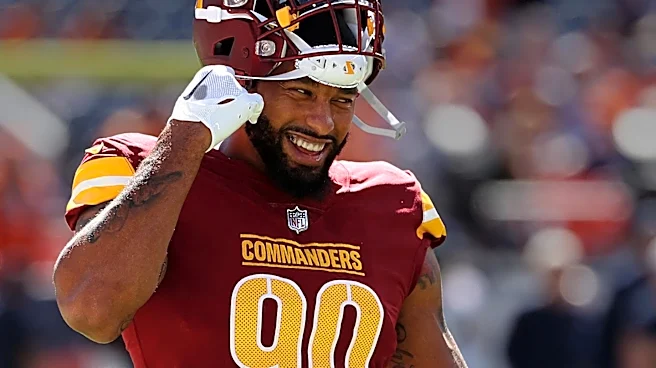
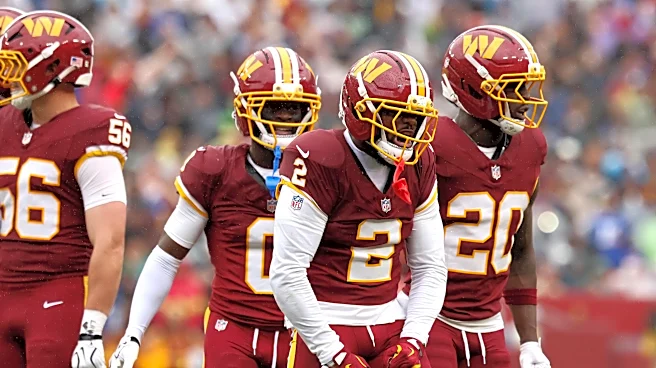
The Washington Commanders are planning to incorporate a spear logo onto their helmets for the upcoming season, a move seen by many as a subtle acknowledgment of their former Washington Redskins identity. While the team is not officially labeling it a 'Native
American spear,' the design is reminiscent of the spear worn on the team's helmets in the 1960s. This change is part of an effort by owner Josh Harris to embrace the franchise's history and traditions. The new uniform, if finalized, is expected to feature the spear piercing the 'W' in the team's current logo. The decision is not yet final, with branding, legal, and financial issues still under consideration. This development follows the team's 2020 decision to abandon the 'Redskins' nickname and associated logos due to pressure from political and marketing sectors that deemed it racist. Owner Josh Harris has stated that the team will not revert to the 'Redskins' nickname.
Why It's Important?
This uniform alteration is significant as it represents a delicate balancing act for the Washington Commanders franchise, attempting to reconnect with its historical identity and fan base while navigating contemporary sensitivities surrounding team branding. The 'Redskins' nickname, used since 1937, was a deeply ingrained part of the team's culture and fan loyalty, but its retirement was a major cultural and political event in U.S. sports. By reintroducing a symbol associated with that era, the team aims to appeal to long-time fans who felt a strong connection to the previous identity, potentially boosting fan engagement and merchandise sales. However, the careful avoidance of explicitly calling it a 'Native American spear' highlights the ongoing tension between honoring tradition and adhering to modern standards of inclusivity and respect. This move could set a precedent for other sports franchises grappling with similar historical branding issues, demonstrating a strategy to acknowledge the past without fully reinstating controversial elements.
What's Next?
The Washington Commanders' plan to add the spear logo is not yet finalized, with ongoing discussions concerning branding, legal, and financial implications. The team is within the five-year window allowed for new ownership to change primary uniforms and logos, as Josh Harris completed his purchase in July 2023. Fans and stakeholders will be watching closely for the official announcement and the final design of the helmet. The team's approach to explaining the symbolism of the spear will be critical in shaping public perception and managing potential reactions from various groups, including Native American communities and those who advocated for the original name change. This decision could influence future branding strategies across professional sports, particularly for teams with historically controversial names or logos, as they seek to balance tradition with evolving societal expectations.
Beyond the Headlines
The reintroduction of the spear logo by the Washington Commanders delves into deeper societal discussions about cultural appropriation, historical memory, and corporate responsibility in sports. While the team aims to embrace its past 'in a respectful way,' the nuanced language around the spear's origin ('Commanders spear' rather than 'Native American spear') underscores the ongoing challenge of reconciling historical imagery with modern ethical standards. This situation highlights the complex relationship between sports franchises, their fan bases, and broader societal values. It also raises questions about the long-term impact of such branding decisions on team identity and community relations. The move could be interpreted as a test case for how sports organizations can acknowledge and celebrate their history without reigniting past controversies, potentially influencing how other teams approach similar dilemmas in the future. The ethical implications of using symbols historically associated with specific cultural groups, even with careful recontextualization, remain a significant aspect of this development.