

What's Happening?
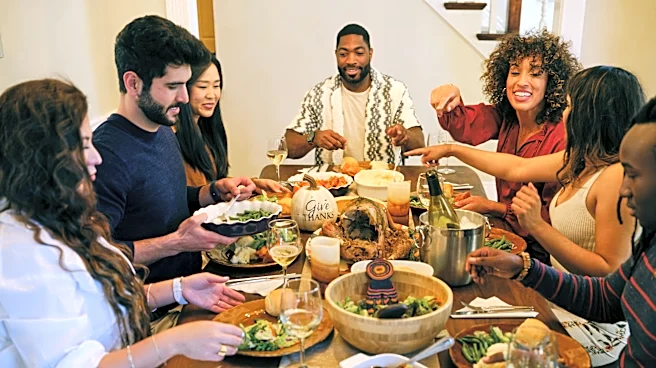
Over 250 lone soldiers and female National Service volunteers gathered at the Nefesh B’Nefesh Aliyah Campus in Jerusalem for an annual Thanksgiving celebration. The event, dubbed 'Friendsgiving,' was hosted by the Nefesh B’Nefesh-FIDF Lone Soldiers Program
in partnership with the Michael Levin Base. It provided a traditional Thanksgiving meal, including turkey, side dishes, and pies, along with live musical entertainment. The aim was to offer a sense of home and community to young individuals, many from the U.S., who are serving in the Israel Defense Forces or National Service far from their families. For many attendees, this was their first Thanksgiving away from home, making the event particularly significant. Volunteers served food, and the atmosphere was enhanced with holiday decorations. This celebration is part of a broader effort by Nefesh B’Nefesh to bring holiday traditions to immigrants living in Israel.
Why It's Important?
This event highlights the unique challenges faced by U.S. citizens who choose to serve in foreign militaries, particularly the emotional and cultural adjustments of being far from home during significant holidays. For these lone soldiers, the Thanksgiving dinner provides crucial social and emotional support, fostering a sense of community and belonging that can mitigate feelings of isolation. It also underscores the commitment of organizations like Nefesh B’Nefesh and FIDF to the well-being of these individuals, recognizing their sacrifices. The gathering allows participants to connect with others who share similar experiences, building a support network that extends beyond the holiday. This initiative is vital for the morale and long-term success of these young people as they navigate their service and eventual transition into civilian life in Israel.
What's Next?
Nefesh B’Nefesh and its partners will likely continue to host similar events for lone soldiers and National Service volunteers throughout the year, especially during other significant holidays. The organizations also provide ongoing support beyond holiday celebrations, including housing solutions, financial assistance, family reunification opportunities, and welfare activities. These programs aim to ensure that lone soldiers receive comprehensive support during their service and as they integrate into Israeli society. The success of events like 'Friendsgiving' may encourage further expansion of such initiatives, potentially involving more community partners and volunteers to reach a wider population of lone soldiers and new immigrants. The focus will remain on building strong communities and providing a sense of family for those serving far from their original homes.
Beyond the Headlines
The gathering in Jerusalem reflects a deeper narrative about identity, belonging, and the transnational connections of individuals. For U.S.-born lone soldiers, serving in the IDF represents a unique intersection of their American heritage and their commitment to Israel. These events help bridge the cultural gap and provide a space where both identities can be acknowledged and celebrated. It also speaks to the broader phenomenon of diaspora communities supporting their members who choose to serve in their ancestral homelands. The dedication of these young individuals, often making significant personal sacrifices, highlights complex motivations rooted in faith, ideology, and a sense of shared destiny. The support provided by organizations like Nefesh B’Nefesh is not just logistical but also deeply psychological, affirming the value of their service and ensuring their well-being in a foreign land.