







What's Happening?
A 1920s L.A. Spanish-style home has undergone an extensive renovation, with its dressing room and closet becoming a central feature. The Los Angeles design firm LAUN was tasked with the project by the musician homeowner, who sought to reflect his eclectic
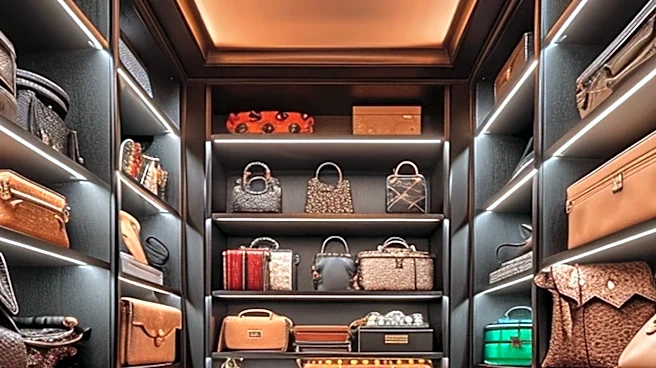
style and fashion collection. The design team converted a large media room and gym into a state-of-the-art dressing room, which includes a bar area and humidity control technology typically used for wine rooms to protect delicate clothing. This 'gallery-level space for couture' features custom cherry millwork, a spacious island, and a generously-sized bench. Additionally, the renovation aimed to honor the home's historic character while incorporating modern updates, such as restoring the original Batchelder fireplace, retaining arched windows, and integrating contemporary plaster, stone, and zellige tile detailing. The home, though well-maintained, required significant updates to modernize it and restore its cohesive interior.
Why It's Important?
This renovation highlights a growing trend in luxury home design where functional spaces, such as closets and dressing rooms, are elevated to become central, highly customized features. The integration of advanced technology, like wine room humidity control, into residential spaces for non-traditional purposes, signifies an evolving demand for specialized environmental controls to preserve valuable personal collections. For the U.S. design and construction industries, this project showcases innovative solutions and the potential for bespoke, high-end modifications that blend historical preservation with modern luxury. It also reflects a broader shift in homeowner priorities, where personal style and the display of curated collections are becoming as important as traditional living areas. The project's success in blending Gothic and Baroque design references with contemporary elements could influence future design trends, emphasizing 'restrained maximalism' and personalized opulence in residential architecture.
What's Next?
The success of this project may inspire similar high-end renovations in historic homes across the U.S., particularly in regions with a rich architectural heritage like Los Angeles. Design firms might increasingly be challenged to integrate advanced technological solutions for climate control and preservation into various residential spaces, moving beyond traditional applications. Homeowners with valuable collections, whether fashion, art, or other delicate items, may seek out specialized design services to create custom environments for their possessions. This could lead to a greater demand for skilled artisans and contractors capable of executing complex, bespoke millwork and integrating sophisticated climate control systems. Furthermore, the concept of 'restrained maximalism' could gain traction, influencing interior design trends that balance opulence with a sense of history and personal narrative.
Beyond the Headlines
Beyond the immediate design implications, this project touches on the evolving definition of luxury and personal space in American homes. The transformation of a functional area into a 'gallery-level space' for clothing suggests a cultural shift where personal possessions are viewed as art or museum-worthy exhibits. This trend could reflect a broader societal emphasis on personal branding and curated lifestyles, where one's home becomes an extension of their identity and passions. The ethical dimension arises in balancing historical preservation with modern interventions; the LAUN team's approach of 'modernizing a historic home without stripping it of its character' offers a model for respectful renovation. This project also subtly highlights the increasing value placed on specialized expertise in design and construction, as evidenced by the need for wine room technology for clothing preservation, indicating a future where highly niche skills are in demand for luxury residential projects.