



What's Happening?
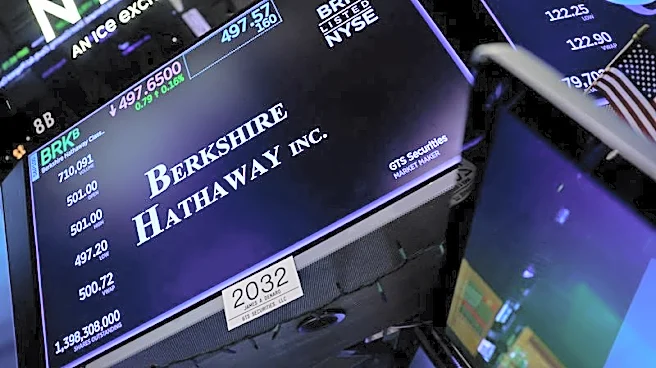
Berkshire Hathaway has significantly increased its stock repurchases, buying back $9.6 billion of its own shares between July and September, with an additional $2 billion in October. This brings the total buybacks for the year to $16.4 billion. This acceleration
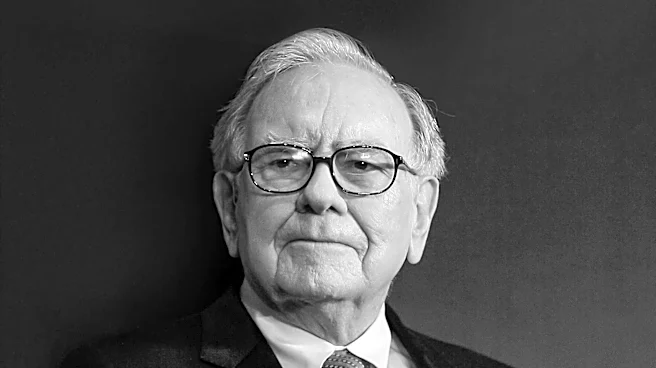
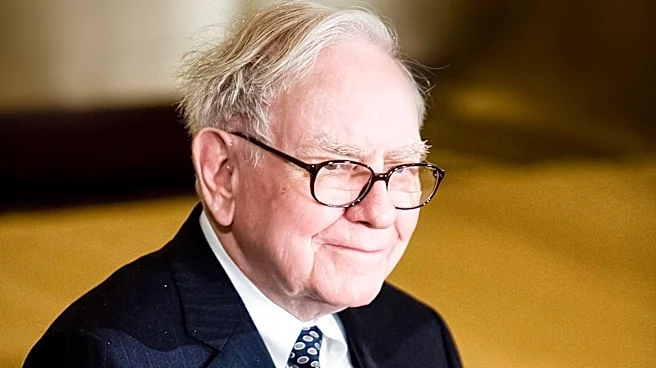
in repurchases is attributed to CEO Greg Abel's more proactive approach to utilizing the conglomerate's substantial cash reserves, a shift from the later years of Warren Buffett's tenure as CEO. Despite these aggressive buybacks, Berkshire Hathaway reported a lower third-quarter profit, with operating earnings down 6% to $12.71 billion and net earnings falling 28% to $22.11 billion. These declines were primarily due to reduced profits in insurance businesses, including Geico, and lower gains from common stock investments. Revenue, however, increased by 11% to $105.65 billion, driven by acquisitions and strong performance in industrial businesses.
Why It's Important?
The increased stock buybacks by Berkshire Hathaway signal a strategic move to return capital to shareholders and potentially boost earnings per share, especially during a period of declining profits. This action reflects CEO Greg Abel's leadership style and his willingness to deploy the company's cash hoard more actively. The mixed financial results, with declining profits but rising revenue, highlight the complex economic environment. While some sectors like industrial businesses performed well, consumer-facing segments and insurance operations faced headwinds. As a major conglomerate often seen as a barometer for the U.S. economy, Berkshire's performance offers insights into broader economic trends, including the impact of inflation and consumer confidence on various industries. The market's positive reaction, with Berkshire's stock outperforming the S&P 500, suggests investor confidence in the company's long-term strategy and its ability to navigate economic uncertainties.
What's Next?
The accelerated stock buybacks are likely to continue as Berkshire Hathaway seeks to optimize its capital structure and enhance shareholder value. Investors will closely monitor future earnings reports to see if the buybacks can offset profit declines and if the company's diverse business units can achieve more consistent growth. The ongoing economic and geopolitical uncertainties mentioned by Berkshire suggest a cautious outlook, which may influence future investment decisions and capital allocation strategies. The transition in leadership from Warren Buffett to Greg Abel will continue to be a focal point, with analysts assessing how Abel's approach to capital deployment and acquisitions will shape Berkshire's future trajectory and its role in the U.S. economy.
Beyond the Headlines
The dynamic between increased stock buybacks and declining profits at Berkshire Hathaway reveals a nuanced corporate strategy. While buybacks can be a tool to support stock prices and shareholder returns, their effectiveness in the long term depends on the underlying health and growth prospects of the company's businesses. This situation also highlights the challenges faced by large, diversified conglomerates in maintaining consistent profitability across all segments amidst fluctuating economic conditions. The shift in leadership from Warren Buffett, known for his patient and often conservative approach, to Greg Abel, who appears more inclined to deploy capital, marks a significant evolution for Berkshire Hathaway. This transition could lead to a more aggressive growth strategy, potentially involving larger acquisitions and a more active management of its vast portfolio, thereby influencing various sectors of the U.S. economy.