
What's Happening?
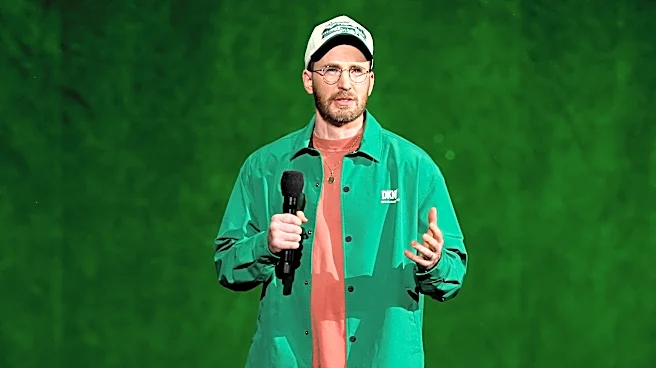
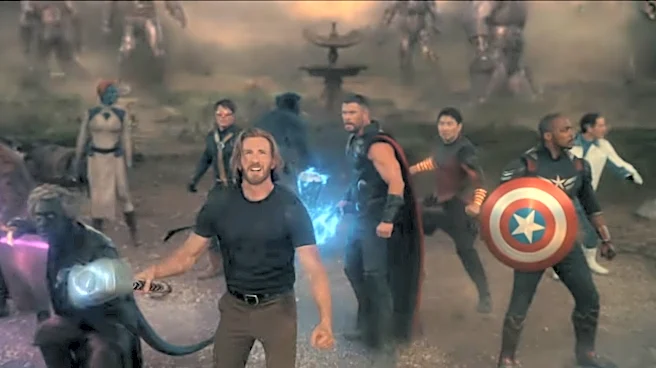
Chris Evans, known for his role as Steve Rogers/Captain America in the Marvel Cinematic Universe (MCU), engaged in secret meetings with Marvel Studios for years following his character's apparent retirement
in 2019's 'Avengers: Endgame'. This occurred despite Evans publicly stating he was 'happily retired' and 'sad to not be back with the band' in various interviews. The upcoming film 'Avengers: Doomsday' trailers now feature his return. According to 'Doomsday' co-director Anthony Russo, Evans is deeply committed to preserving the cinematic experience for moviegoers, which influenced his public statements. Evans also revealed that during the filming of 'Endgame', Marvel Studios president Kevin Feige and co-president Louis D’Esposito proposed a continuation of his role as 'Nomad', an alternate identity for Steve after he relinquished the Captain America title. While Evans found the pitch compelling, he declined at the time, feeling content with how his character's arc had concluded.
Why It's Important?
The revelation of Chris Evans' secret negotiations and his return to the MCU for 'Avengers: Doomsday' holds significant importance for the entertainment industry and Marvel's strategic planning. It demonstrates the lengths to which major studios will go to maintain secrecy around key plot developments and character returns, especially for highly anticipated franchises. This approach aims to maximize audience surprise and engagement, directly impacting box office performance and fan loyalty. For Marvel, bringing back a beloved character like Steve Rogers, even after a definitive send-off, signals a willingness to revisit established narratives to drive future content. This could set a precedent for other 'retired' characters in the MCU, influencing future casting decisions and story arcs. The commitment to 'saving the experience for the movie theater' also underscores the ongoing effort by filmmakers and studios to draw audiences back to cinemas in an evolving media landscape, impacting the financial health of the theatrical exhibition sector.
What's Next?
The return of Steve Rogers in 'Avengers: Doomsday' is set to open on December 18, 2026. The film's trailers show Steve and Peggy Carter appearing young again and having a child, suggesting significant 'time shenanigans' will be central to the plot. This development will likely lead to intense fan speculation and analysis regarding the timeline and continuity of the MCU. The movie's release will be a major event, with high expectations for its box office performance and critical reception. The narrative choices made in 'Doomsday' could redefine the future direction of the MCU, potentially opening doors for new character developments, spin-offs, or even alternative timelines. The success of this return could also influence how other major franchises approach bringing back iconic characters, impacting future production strategies across Hollywood.
Beyond the Headlines
The strategic decision by Chris Evans and Marvel to keep his return a secret, despite public statements to the contrary, highlights a fascinating aspect of modern celebrity and franchise management. It raises questions about the authenticity of public statements made by actors regarding their future roles, especially within tightly controlled cinematic universes. This practice, while effective for generating hype, also blurs the lines between public persona and contractual obligations. Furthermore, the reintroduction of Steve Rogers, particularly with a seemingly altered timeline where he and Peggy Carter are young and have a child, delves into complex themes of time travel, alternate realities, and the consequences of altering established narratives. This could lead to deeper philosophical discussions among audiences about fate, choice, and the nature of heroism within a multiverse framework, potentially influencing future storytelling trends in popular culture.