




What's Happening?
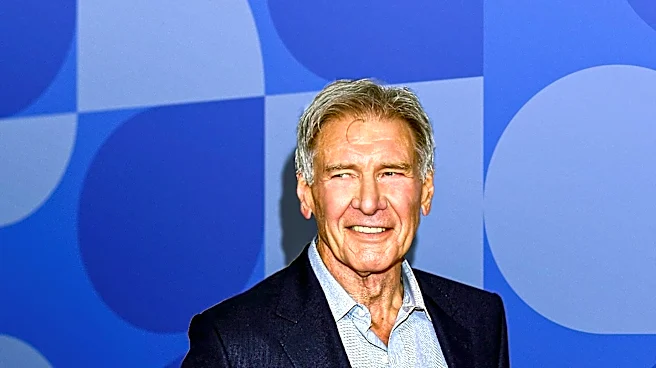
Hollywood actor Harrison Ford, 84, was recently observed cycling through Los Angeles, showcasing a fit physique in a form-fitting speed suit. According to AOL articles, Ford is frequently seen engaging in physical activities like cycling, tennis, and
gym sessions to maintain his health. His fitness regimen, as detailed by his former personal trainer Jake Steinfeld, included a rigorous weekly workout routine in the 1980s focusing on different muscle groups daily. Ford himself stated to Men's Health that his training prioritizes injury prevention. In 2023, during the promotion of his film 'Indiana Jones and the Dial of Destiny,' a journalist praised his appearance and fitness level, and he received a five-minute standing ovation and the Palme d'Or at a film festival. Ford, who has appeared in over 74 films and received an Academy Award nomination in 1985 for 'Witness,' maintains a relatively private life.
Why It's Important?
Harrison Ford's continued dedication to fitness at 84 years old highlights the growing emphasis on active aging and health longevity within American society. His public appearances, demonstrating physical vitality, can serve as an inspiration for older adults to maintain active lifestyles, potentially influencing public health initiatives and personal wellness choices. For the entertainment industry, Ford's sustained physical capability allows him to continue taking on demanding roles, challenging age-related stereotypes in Hollywood and potentially extending the careers of older actors. His commitment to health also underscores a broader cultural shift towards preventative care and sustained well-being, impacting consumer trends in fitness products, healthy living, and age-defying practices.
Beyond the Headlines
Beyond the immediate news of his fitness, Harrison Ford's public persona as an active octogenarian contributes to a cultural redefinition of aging. His ability to maintain a demanding career and physical health challenges traditional perceptions of retirement and decline, suggesting that age does not necessarily equate to diminished capacity. This narrative can have profound psychological and societal impacts, encouraging a more positive outlook on aging and potentially influencing policy discussions around healthcare, retirement age, and opportunities for older individuals in the workforce. His candid remarks about training for injury prevention also subtly advocate for a practical and sustainable approach to fitness, rather than solely aesthetic goals, resonating with a wider audience seeking realistic health strategies.