





What's Happening?
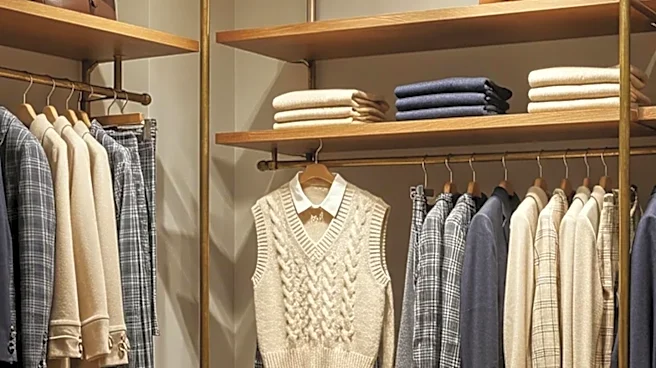
Ralph Lauren, founded by Ralph Lifshitz in 1967, continues to define American Classic style, characterized by menswear-inspired tailoring, crisp button-downs, cable knits, tweed, denim, and fine leather. The brand's aesthetic draws inspiration from Ivy
League campuses, the English countryside, and the American West, focusing on creating garments designed to be worn for years rather than a single season. Ralph Lauren's approach to fashion prioritizes enduring style over transient trends, a philosophy that has remained consistent since its inception. The brand offers various lines, including Polo Ralph Lauren for classic everyday wear and Lauren Ralph Lauren, a more accessible women's line found in department stores, which includes petite and plus sizes. The company also supports cancer charities through its Pink Pony campaign, where a portion of sales from specific items is donated.
Why It's Important?
The enduring appeal of Ralph Lauren's American Classic style highlights a significant trend in the fashion industry towards longevity and quality over fast fashion. This focus on timeless pieces, such as blazers, cable knits, and leather goods, suggests a consumer preference for investment pieces that offer a low cost per wear over time. For U.S. consumers, this means a potential shift in purchasing habits, favoring durable and versatile clothing that transcends seasonal fads. The brand's multi-tiered approach, with accessible lines like Lauren Ralph Lauren, also makes this classic aesthetic available to a broader demographic, reinforcing its cultural impact. Furthermore, Ralph Lauren's philanthropic efforts through the Pink Pony campaign demonstrate a commitment to social responsibility, which can influence consumer perception and loyalty in an increasingly conscious market.
What's Next?
As Ralph Lauren continues to emphasize its classic aesthetic, consumers can expect the brand to maintain its focus on quality and timeless design. The brand's various lines will likely continue to cater to different market segments, ensuring accessibility while preserving its luxury appeal. The ongoing success of its core offerings, such as cable knits and tailored pieces, suggests that these items will remain central to its collections. The brand's commitment to initiatives like the Pink Pony campaign may also expand, potentially influencing other fashion companies to integrate social responsibility into their business models. Retail strategies, including sales at department stores like Bloomingdale's and Macy's, will continue to make the brand's accessible lines available to a wide audience, encouraging investment in classic wardrobe staples.
Beyond the Headlines
The longevity of Ralph Lauren's style reflects a deeper cultural appreciation for heritage and authenticity in American fashion. In an era dominated by rapid trend cycles and disposable clothing, Ralph Lauren's consistent adherence to its foundational aesthetic offers a counter-narrative, suggesting that true style is about personal expression and lasting quality rather than fleeting novelty. This approach also subtly critiques the 'old money' aesthetic, distinguishing between a trend that can be bought and a classic style that is cultivated over time. The brand's success in maintaining its relevance for decades underscores the idea that certain design principles, rooted in tradition and craftsmanship, possess an inherent value that transcends commercial pressures. This philosophy could inspire a broader re-evaluation of consumption patterns, encouraging consumers to invest in pieces that resonate with their personal style and values, rather than succumbing to transient fashion dictates.