





What's Happening?
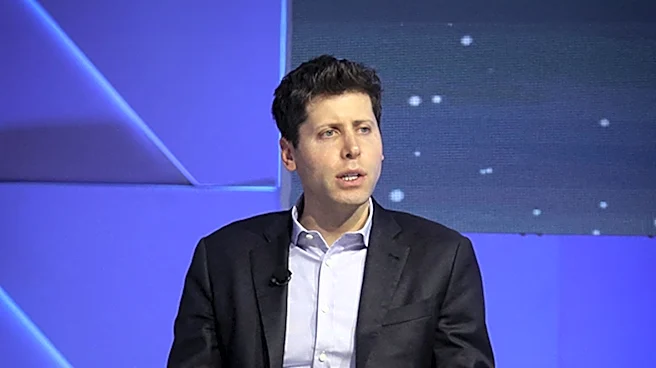
Sam Altman, the founder and CEO of OpenAI, has suggested that parents use AI technology, specifically ChatGPT, to create personalized podcasts about their children's lives. This idea was shared on the social media platform X, where Altman proposed that parents could
connect their family calendars to ChatGPT to generate daily podcasts. These podcasts could cover topics such as a child's soccer game, upcoming birthdays, and other personal news. The suggestion has garnered significant attention, with Altman's post receiving around 9,500 likes. However, it also faced criticism, notably from Alex Hirsch, creator of 'Gravity Falls,' who questioned the need for such technology when parents could simply talk to their children. The backlash highlights concerns about AI's role in personal relationships and its potential to encourage disconnection within families.
Why It's Important?
The suggestion by Sam Altman underscores a growing trend of integrating AI into everyday life, raising questions about the balance between technology and personal interaction. While AI can offer convenience and personalization, critics argue that it may also lead to a reduction in direct communication and emotional connection within families. This debate is part of a broader discourse on the implications of AI, which includes concerns about privacy, job displacement, and the environmental impact of AI technologies. The conversation around AI-generated content, like podcasts, reflects societal anxieties about the potential for technology to replace human relationships and the ethical considerations of such advancements.
What's Next?
As AI technology continues to evolve, discussions about its role in personal and family life are likely to intensify. Stakeholders, including tech companies, policymakers, and social commentators, may engage in debates about the ethical use of AI in domestic settings. There could be calls for guidelines or regulations to ensure that AI tools are used in ways that enhance rather than detract from human relationships. Additionally, as more families experiment with AI-generated content, there may be further studies or surveys to assess the impact of such technologies on family dynamics and communication.
Beyond the Headlines
The suggestion by Altman also touches on the broader cultural shift towards digital and AI-driven solutions in various aspects of life. This shift raises questions about the long-term effects on human behavior and societal norms. As AI becomes more integrated into daily routines, there may be a need to address issues of digital literacy and the ability to critically assess the role of technology in personal interactions. Furthermore, the conversation around AI-generated content could influence future developments in AI ethics and the creation of technologies that prioritize human well-being.