


What's Happening?
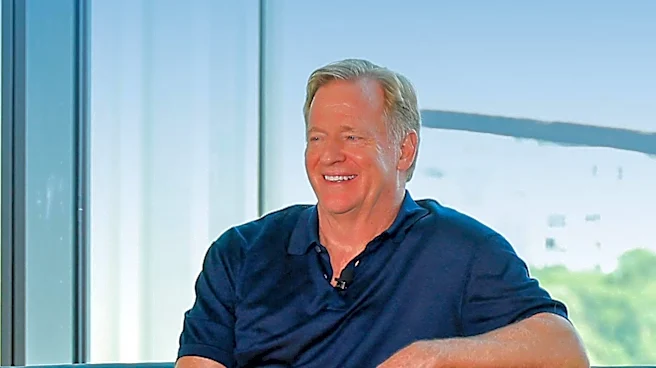
NFL Commissioner Roger Goodell recently articulated a redefined perspective on his role, stating that he views players, fans, and commercial partners as his 'bosses,' in addition to the 32 team owners. This statement was made during an appearance on the 'Hustle
Like You're Broke' podcast with his wife, Jane Skinner Goodell. Goodell emphasized that his position involves satisfying all these constituents to achieve success, acknowledging the complex dynamic of having multiple stakeholders rather than a single boss. His comments came shortly after NFL owners approved a four-year contract extension, securing his tenure through the 2030 season, expiring on March 31, 2031. According to a memo from New England Patriots owner Robert Kraft, over 95% of Goodell's total compensation is tied to his and the NFL's performance against various metrics, at the discretion of the Compensation Committee.
Why It's Important?
Commissioner Goodell's recharacterization of his role is significant as it publicly acknowledges the evolving power dynamics within the NFL. By including players, fans, and partners as 'bosses,' he signals a recognition of their growing influence and importance in the league's overall success and public image. This perspective could lead to a more inclusive approach in decision-making, potentially impacting future collective bargaining agreements with the NFL Players Association (NFLPA), which runs through March 2031. It also highlights the commercial realities of modern sports, where fan engagement and sponsor relationships are as crucial as owner satisfaction. For players, this acknowledgment could empower them in future negotiations regarding issues like an 18-game regular season or international expansion. For fans, it suggests a greater emphasis on their experience and feedback, potentially influencing league policies and initiatives.
What's Next?
Goodell's extended contract through 2030 means he will be at the helm for the next round of critical negotiations, including the collective bargaining agreement with the NFLPA and new deals with broadcasting partners. His stated philosophy of considering players, fans, and partners as 'bosses' could influence the tone and outcomes of these discussions. The league is currently considering significant changes such as an 18-game regular season and further international expansion, issues that directly impact players and fans. While Goodell's remarks do not grant formal authority to these groups, they suggest a strategic shift towards greater stakeholder engagement. The practical implementation of this philosophy will be observed in how the NFL addresses player welfare, fan experience, and commercial partnerships in the coming years.
Beyond the Headlines
Goodell's comments delve into the deeper philosophical underpinnings of leadership in a multi-billion dollar sports enterprise. His acknowledgment of diverse 'bosses' moves beyond a traditional corporate hierarchy, suggesting a more distributed model of accountability. This approach could be seen as a response to increasing demands for transparency and shared governance in professional sports, particularly from player associations and fan advocacy groups. It also reflects a broader trend in corporate leadership where stakeholder capitalism, rather than solely shareholder capitalism, is gaining traction. The challenge for Goodell will be to balance the often-conflicting interests of these various 'bosses' while maintaining the league's financial growth and competitive integrity. This shift in rhetoric could set a precedent for other major sports leagues in how they perceive and manage their relationships with key constituents.