





What's Happening?
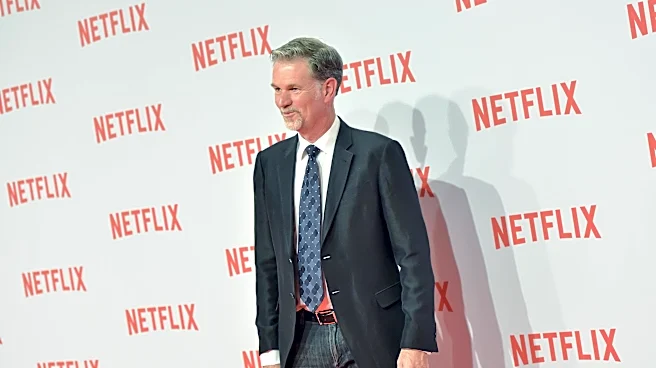
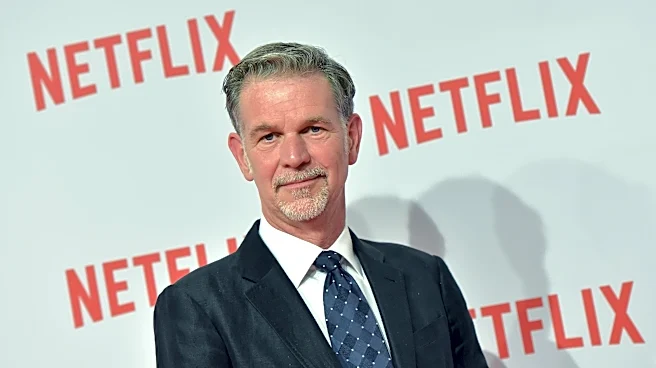
In 2000, Reed Hastings, co-founder of Netflix, along with Marc Randolph, offered to sell their then-fledgling DVD-by-mail rental business to Blockbuster for $50 million. Blockbuster, a dominant force in the video rental market at the time, declined the offer.
This decision proved to be a pivotal moment in the entertainment industry. Netflix, which started as a small company, eventually grew into one of the largest entertainment companies globally, achieving $39 billion in revenue and ranking #116 on the Fortune 500 list. Conversely, Blockbuster faced significant challenges and ultimately declared bankruptcy approximately ten years after rejecting the acquisition proposal from Netflix.
Why It's Important?
Blockbuster's rejection of Netflix's acquisition offer in 2000 highlights a significant misjudgment of emerging market trends and technological shifts within the entertainment industry. This decision allowed Netflix to independently develop and innovate, eventually transitioning from a DVD-by-mail service to a streaming giant that revolutionized content consumption. The outcome underscores the importance of foresight and adaptability in business, demonstrating how established companies can fail to recognize disruptive innovations. For consumers, Netflix's growth led to unprecedented access to a vast library of content, fundamentally changing how people watch movies and television. For the business world, it serves as a cautionary tale about underestimating potential competitors and failing to embrace new business models.
What's Next?
While the specific event of Blockbuster's rejection is historical, its implications continue to resonate in the ongoing evolution of the entertainment industry. The success of Netflix, born from that rejection, has spurred intense competition in the streaming sector, with numerous companies now vying for market share. This competitive landscape drives continuous innovation in content creation, distribution methods, and technological advancements. Companies are constantly evaluating new business models, such as ad-supported tiers and live events, to attract and retain subscribers. The legacy of Blockbuster's decision serves as a constant reminder for current industry players to remain agile and responsive to technological shifts and consumer preferences to avoid similar fates.
Beyond the Headlines
The Blockbuster-Netflix saga extends beyond a simple business transaction; it represents a broader narrative of disruption and the challenges faced by incumbent industries when confronted with new technologies. Blockbuster's failure to acquire Netflix can be viewed as a classic case of 'innovator's dilemma,' where a successful company's existing business model and customer base prevent it from embracing potentially disruptive, yet initially less profitable, innovations. This event also illustrates the power of vision and perseverance, as Netflix's founders continued to build their company despite the initial rejection. The story has become a foundational case study in business schools, emphasizing the critical need for strategic foresight, risk-taking, and adaptability in a rapidly changing economic landscape, influencing how startups and established corporations approach innovation and market strategy today.