





What's Happening?
The global smart kitchen appliances market is experiencing significant growth, with projections indicating it will reach US$46.5 billion by 2034. This expansion is driven by a compound annual growth rate (CAGR) of 8.9% from 2024 to 2034. In 2023, the
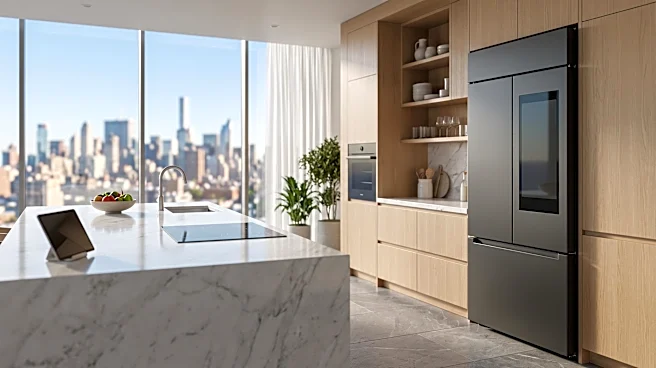
market was valued at US$18.2 billion. Smart kitchen appliances are defined as connected household devices that integrate conventional kitchen functions with advanced technologies such as the Internet of Things (IoT), Artificial Intelligence (AI), sensors, automation, Wi-Fi, Bluetooth, and voice control. These devices enable users to manage kitchen activities remotely through smartphones, tablets, dedicated applications, or voice assistants. The product category encompasses a wide range of items, including smart refrigerators, ovens, dishwashers, coffee makers, air fryers, cookers, hobs, and range hoods. Key features include remote operation, automated temperature control, food inventory monitoring, recipe recommendations, maintenance alerts, and energy management capabilities. The increasing adoption of smart homes and consumer demand for convenience and energy efficiency are central to this market expansion.
Why It's Important?
The robust growth of the smart kitchen appliances market signifies a major shift in consumer expectations and technological integration within U.S. households. This trend impacts various sectors, from manufacturing and retail to energy and technology. For manufacturers like Samsung, LG Electronics, and Whirlpool Corporation, it means a continued focus on innovation, interoperability, and cybersecurity to meet evolving consumer demands. The emphasis on energy efficiency in smart appliances aligns with broader sustainability goals and could lead to significant energy savings for consumers, influencing utility providers and energy policy. The integration of AI and IoT into these devices creates new opportunities for data-driven services, such as personalized cooking assistance and predictive maintenance, potentially transforming how consumers interact with their homes. However, it also raises concerns about data privacy and cybersecurity, which manufacturers and policymakers will need to address to build consumer trust. The market's expansion also suggests a growing demand for skilled labor in areas like software development, AI engineering, and smart home installation and maintenance.
What's Next?
The smart kitchen appliances market is expected to continue its strong growth trajectory through 2034, with ongoing advancements in connectivity, automation, and AI. Manufacturers will likely focus on developing interoperable products that seamlessly integrate into broader smart home ecosystems. This includes enhancing AI-powered personalization, voice-enabled control, and features aimed at reducing food waste, such as inventory monitoring and expiration alerts. The industry will also need to address challenges such as the higher upfront costs of smart appliances and concerns regarding data privacy and cybersecurity to ensure wider adoption. Emerging economies, particularly in Asia Pacific, represent significant growth opportunities due to rising middle-class populations and increasing internet penetration. Strategic partnerships between appliance manufacturers and real estate developers or kitchen solution providers are anticipated to accelerate deployment in new housing projects. Furthermore, continuous technological improvements and adherence to energy-efficiency requirements will remain critical drivers for market expansion.
Beyond the Headlines
The proliferation of smart kitchen appliances extends beyond mere convenience, touching upon deeper societal and ethical considerations. The increasing reliance on AI for tasks like recipe recommendations and inventory management could subtly influence dietary habits and consumption patterns, potentially impacting public health and food waste. The collection of personal data by these connected devices raises significant privacy concerns, necessitating robust data protection regulations and transparent data usage policies. As kitchens become more automated and integrated, there's a potential for a shift in traditional domestic roles and skills, with implications for education and lifestyle. The aesthetic integration of these appliances, as seen in trends towards monolithic designs and hidden features, reflects a broader cultural desire for seamless technology that blends into the living environment rather than dominating it. This trend could also influence architectural design and home construction, favoring smart-ready infrastructure. The long-term environmental impact of manufacturing and disposing of increasingly complex electronic appliances will also become a more pressing concern, pushing for greater sustainability in product design and lifecycle management.