





What's Happening?
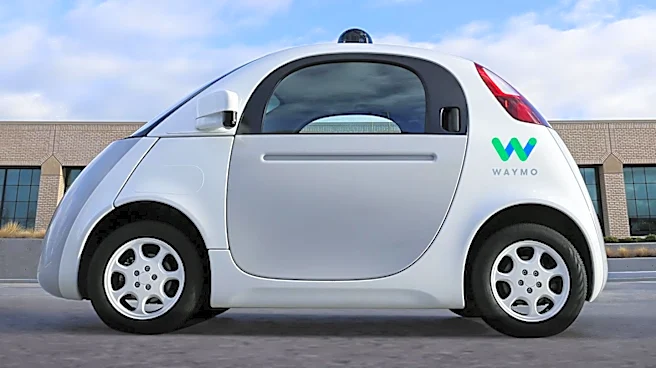
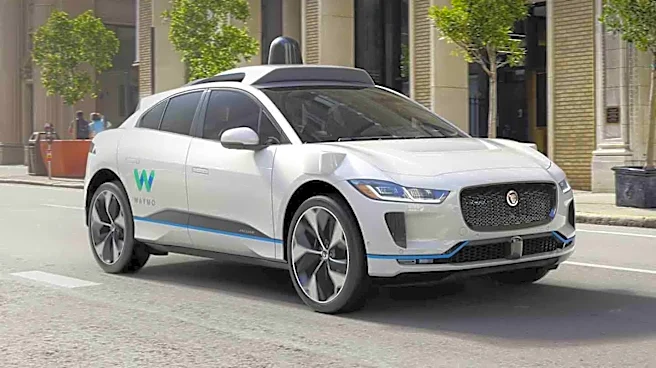
Waymo, an autonomous driving technology company, has integrated Google's Gemini AI into its custom Ojai vehicles to provide a more helpful and personalized in-car experience. While the Waymo Driver continues to handle the autonomous navigation, passengers
can now interact with Gemini as an in-car AI assistant. This integration allows users to control various cabin functions and access information about their surroundings using voice commands. For example, passengers can ask Gemini to adjust the air conditioning, locate nearby coffee shops, or provide historical facts about landmarks they are passing. Gemini operates independently of the Waymo Driver and remains inactive until a passenger chooses to engage with it, ensuring that the AI assistant does not interfere with the vehicle's primary autonomous functions.
Why It's Important?
This development marks a significant step in enhancing the passenger experience within autonomous vehicles, moving beyond just transportation to offer a comprehensive in-car assistant. For the U.S. automotive and technology industries, this integration showcases the growing convergence of AI and mobility, potentially setting new standards for in-vehicle infotainment and utility. It could influence consumer expectations for future autonomous and even traditional vehicles, pushing manufacturers to incorporate more sophisticated AI-driven features. The ability to control cabin settings and access real-time information hands-free improves convenience and safety, allowing passengers to focus on their journey or other activities. This also positions Waymo as a leader in leveraging advanced AI to differentiate its autonomous ride-hailing services, potentially attracting more users and accelerating the adoption of self-driving technology in the U.S.
What's Next?
Waymo's integration of Gemini into its Ojai vehicles suggests a future where in-car AI assistants become a standard feature in autonomous fleets. The company will likely gather user feedback to refine Gemini's capabilities and expand its range of functions. This could include more personalized recommendations, integration with other smart devices, or even proactive assistance based on passenger preferences and travel patterns. Other autonomous vehicle developers and traditional automakers may follow suit, investing more heavily in AI-powered in-car experiences to remain competitive. The success of this integration could also pave the way for broader applications of Gemini in other mobility solutions, further solidifying Google's presence in the automotive AI landscape. Continued advancements in voice recognition and natural language processing will be crucial for the seamless evolution of such in-car assistants.
Beyond the Headlines
The introduction of Gemini into Waymo's Ojai vehicles raises deeper implications concerning privacy, data security, and the evolving relationship between humans and AI in enclosed spaces. As AI assistants become more integrated into daily commutes, questions about how personal data is collected, stored, and utilized will become paramount. Passengers might share sensitive information or preferences with Gemini, necessitating robust privacy protocols. Furthermore, the presence of an AI assistant that can provide information about surroundings and control vehicle functions could subtly alter the passenger's sense of control and autonomy, even in an autonomous vehicle. This development also highlights the increasing 'smartification' of physical spaces, where AI anticipates needs and provides services, potentially leading to a more seamless but also more data-driven and AI-dependent daily life. The ethical considerations of AI decision-making and interaction in a passenger-facing role will continue to be a critical area of discussion.