
What's Happening?
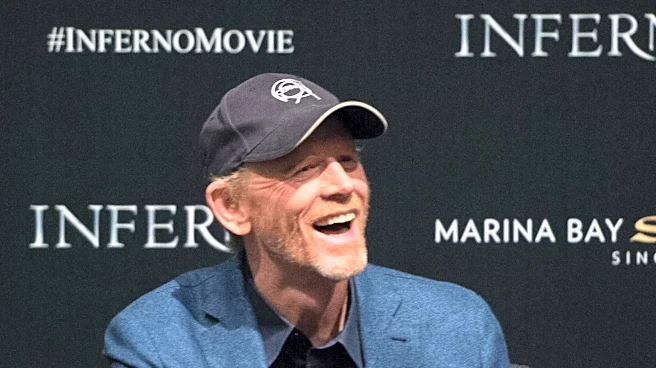
Director Ron Howard recently joined Sean Fennessey and Amanda Dobbins on The Ringer podcast to discuss his new documentary, 'Avedon.' During the interview, Howard elaborated on his growing interest in the documentary genre
at this stage of his career and shared how he became deeply fascinated by the influential photographer Richard Avedon throughout the filmmaking process. The podcast episode also covered various movie news headlines, including new contenders for the James Bond role, The New York Times' acquisition of Letterboxd, and a remake of 'You've Got Mail.'
Why It's Important?
Ron Howard's pivot towards and increasing engagement with documentary filmmaking, as discussed on The Ringer podcast, signifies a notable shift in his directorial focus. This move by a director of his caliber can bring increased attention and credibility to the documentary genre, potentially influencing other mainstream filmmakers to explore non-fiction storytelling. His deep dive into the life and work of Richard Avedon through 'Avedon' underscores the enduring cultural significance of figures who have shaped visual arts. For the film industry, this trend could lead to more investment in documentaries, offering diverse narratives and historical insights to a broader audience.
What's Next?
Ron Howard's continued exploration of the documentary genre suggests that 'Avedon' may be one of several non-fiction projects he undertakes. His discussion on The Ringer podcast indicates a sustained interest in this area, which could lead to future documentaries on other culturally significant subjects. The film 'Avedon' itself is expected to be a subject of ongoing critical discussion and audience engagement, particularly given Howard's insights into its creation. This interview serves to promote the film and generate anticipation for its release and subsequent screenings, further solidifying its place in the current cinematic landscape.
Beyond the Headlines
Ron Howard's expressed fascination with Richard Avedon and the documentary genre highlights a broader trend in filmmaking where established directors are increasingly drawn to exploring real-life stories and historical figures. This shift can be seen as a response to a growing audience appetite for authentic narratives and in-depth examinations of cultural icons. It also raises questions about the evolving role of the director in shaping public understanding of history and art. By choosing subjects like Avedon, Howard is not just telling a story but also contributing to the preservation and reinterpretation of artistic legacies, potentially influencing how future generations perceive and study these figures.