









What's Happening?
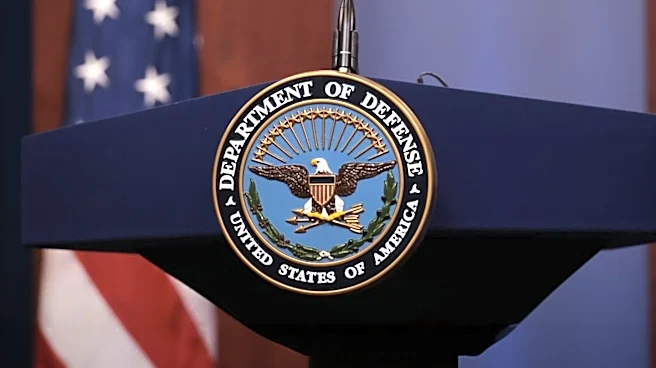
Alibaba, a major Chinese technology company, has filed a lawsuit against the U.S. Department of Defense. The lawsuit, submitted in the U.S. District Court in the Northern District of California, seeks to remove Alibaba from the Pentagon's list of Chinese military
companies. This designation, announced on June 8, prevents Alibaba from securing U.S. defense contracts and potentially harms its reputation. Alibaba argues that the designation lacks factual or legal basis and was reached without a fair process. This legal action is part of a broader trend where Chinese companies are contesting U.S. national security labels. The list, created in response to concerns about China's military threat, includes 188 entities, ranging from state-owned defense businesses to private tech firms like Alibaba. The Chinese government and affected companies have protested these designations.
Why It's Important?
The lawsuit highlights ongoing tensions between the U.S. and China, particularly in the realm of technology and national security. For Alibaba, being labeled as a military company could lead to significant financial and reputational damage, affecting its operations and partnerships in the U.S. The case underscores the broader geopolitical struggle as the U.S. seeks to limit China's influence in critical sectors. This legal battle could set a precedent for how similar cases are handled in the future, impacting other Chinese companies facing similar designations. The outcome may influence U.S.-China relations, especially as both nations attempt to stabilize their interactions amid rising tensions.
What's Next?
The court's decision on Alibaba's lawsuit will be closely watched, as it could influence the strategies of other Chinese companies facing similar challenges. If Alibaba succeeds, it may encourage more companies to contest their designations, potentially leading to a reevaluation of the Pentagon's list. Conversely, if the court upholds the designation, it could reinforce the U.S. government's stance on limiting Chinese influence in sensitive sectors. The case may also prompt diplomatic discussions between the U.S. and China, as both countries navigate their complex economic and security relationship.