




What's Happening?
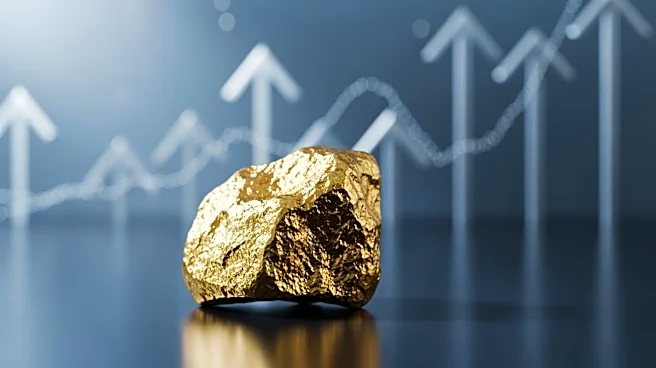
Gold prices fell sharply as the U.S. dollar reached a one-year high, driven by expectations of a Federal Reserve interest rate hike. The stronger dollar has created a challenging environment for gold, a non-yielding asset, as investors anticipate tighter
monetary policy to combat inflation. The market is also assessing the impact of U.S.-Iran peace talks, which have influenced oil prices. Despite recent declines, analysts suggest that gold prices will be primarily driven by monetary policy and the strength of the U.S. dollar in the medium to long term.
Why It's Important?
The Federal Reserve's monetary policy decisions have a profound impact on global financial markets, particularly on commodities like gold. As interest rates rise, the appeal of holding gold diminishes, leading to price declines. The stronger dollar further exacerbates this trend, affecting investors and industries reliant on precious metals. The situation highlights the delicate balance central banks must maintain between controlling inflation and supporting economic growth. The outcome of U.S.-Iran negotiations could also influence energy prices and inflation, adding another layer of complexity to the economic landscape.
What's Next?
Investors will focus on upcoming U.S. economic data, including the Personal Consumption Expenditures Index, for clues on the Federal Reserve's policy trajectory. The market will also monitor geopolitical developments, particularly in the Middle East, which could impact energy prices and inflation. As the year progresses, the interplay between monetary policy, currency strength, and geopolitical events will continue to shape the outlook for gold and other commodities. Stakeholders will need to remain vigilant, adjusting strategies to navigate the evolving economic environment.