




What's Happening?
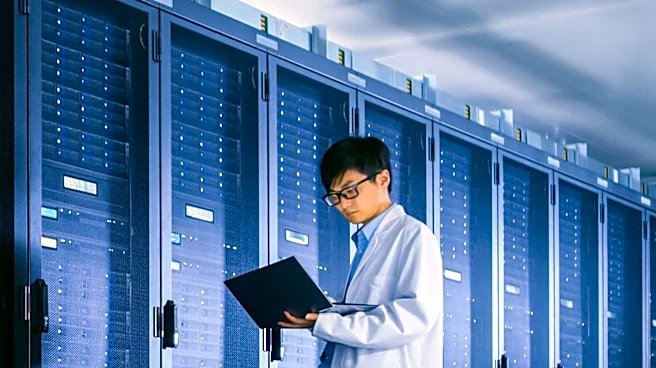
Quincy, Washington, once primarily an agricultural town known for its crops, has undergone a significant transformation over the past two decades due to the development of data centers. Companies like Microsoft and Yahoo began establishing data centers in the area
in 2006, drawn by abundant hydropower, available land, and lower electricity costs. This influx of technology infrastructure has led to substantial growth and modernization within the city. The population has increased by nearly 27% over 15 years, and the city has seen the construction of new public facilities, including a high school, hospital, police station, fire station, library, and aquatic center. Local businesses, such as electrical contractor Mike Stetner's company, have expanded significantly, growing from three employees to approximately 220, specializing in data center projects.
Why It's Important?
The transformation of Quincy, Washington, exemplifies the profound economic and social impact that large-scale technology investments, particularly data centers, can have on rural communities. The shift from an agricultural economy to a tech-driven one has dramatically expanded the city's assessed value and job base, making possible public projects that were previously unattainable. For instance, the data centers account for about 54% of the local school district's tax base, enabling a $108 million bond for a new high school. The new hospital, a $55 million project, also benefited from the increased assessed values, allowing for a reduced tax rate and repayment period for voters. This case highlights how strategic economic development can revitalize communities, create new career opportunities, and improve public services, demonstrating a model for other regions seeking to attract tech investment.
What's Next?
Quincy's continued growth as a data center hub suggests further development and potential challenges. While the city has successfully managed its expansion, the long-term implications of high energy demands from data centers on the power grid and local resources remain a subject of study. Washington state lawmakers have extended tax preferences for data centers but also included provisions to study their impact on the power grid. Future developments will likely focus on balancing economic benefits with environmental sustainability, such as Microsoft's investment in a water reuse center to reduce potable water consumption. The city will continue to adapt its infrastructure and services to support its growing population and evolving economic landscape, potentially attracting more tech companies and related industries.
Beyond the Headlines
The story of Quincy, Washington, delves into the complex interplay between economic development, environmental considerations, and community identity. While the data center boom has brought prosperity and modern amenities, it also raises questions about the preservation of local character and the long-term sustainability of such rapid industrialization. The reliance on cheap hydropower, while beneficial, underscores the importance of regional energy resources in attracting major tech investments. Furthermore, the narrative highlights the ethical dimension of corporate responsibility, as companies like Microsoft invest in infrastructure like water reuse centers to mitigate their environmental footprint. Quincy's experience serves as a case study for other communities contemplating similar transformations, illustrating both the immense opportunities and the critical need for thoughtful planning and resource management in the face of technological advancement.