








What's Happening?
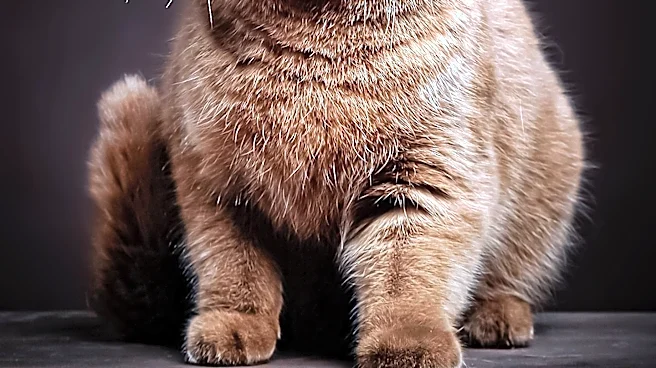
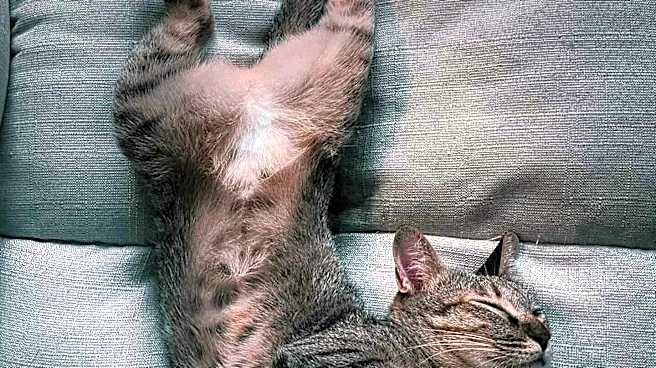
Cats are known to sleep between 12 and 16 hours a day, a behavior often misunderstood as laziness. However, this sleep pattern is linked to their hunting strategy, which requires short bursts of energy. Cats are polyphasic sleepers, meaning they sleep in multiple
bouts rather than one long stretch. This pattern is supported by veterinary and pet-health sources, which agree on the sleep duration for healthy adult cats. The Sleep Foundation notes that a typical cat nap lasts around 78 minutes. The idea that cats sleep to conserve energy for hunting is debated among researchers, with some arguing that the energy saved during sleep is minimal. Instead, cats' long sleep may be more related to their safety and lack of predators in domestic environments.
Why It's Important?
Understanding cats' sleep patterns is crucial for pet owners and veterinarians as it impacts how cats are cared for and perceived. The misconception that cats are lazy can affect how they are treated, potentially leading to neglect of their natural behaviors and needs. Recognizing the biological and evolutionary reasons behind their sleep can improve pet care practices and enhance the human-animal bond. Additionally, this insight can inform studies on animal behavior and sleep, contributing to broader scientific knowledge about sleep's role in energy conservation and predator-prey dynamics.