





What's Happening?
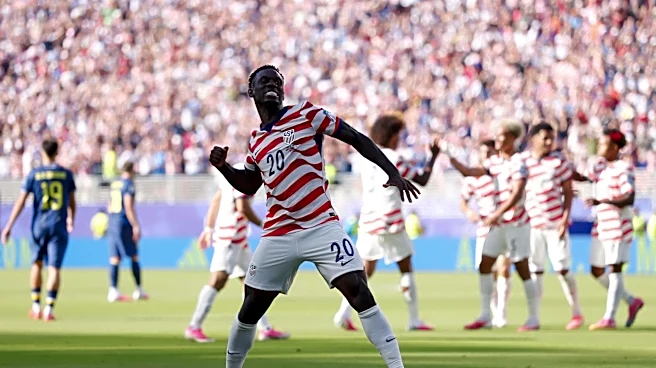
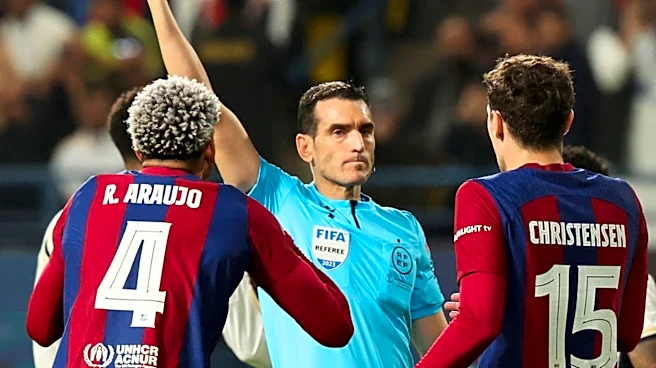
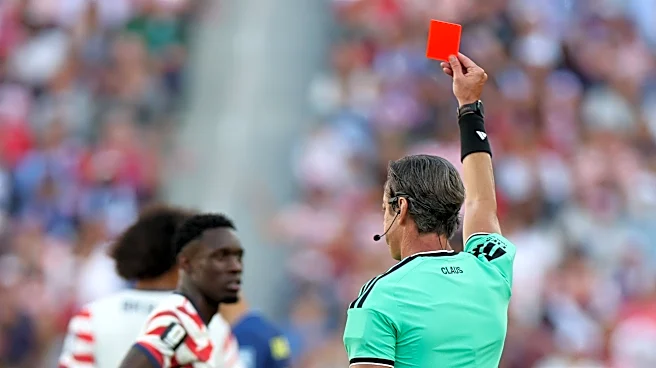
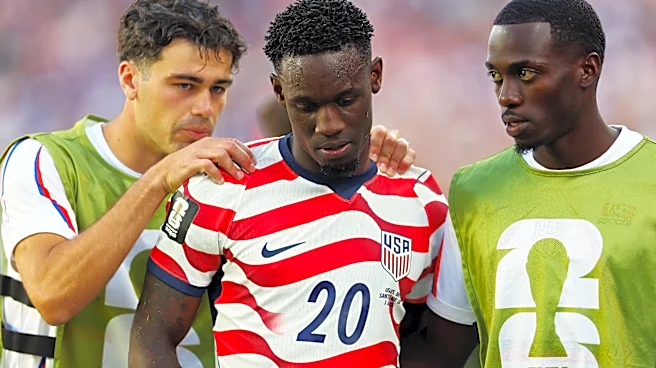
During the 2026 FIFA World Cup, a controversial decision was made involving the U.S. Men's National Team (USMNT) forward Folarin Balogun. In a match against Bosnia-Herzegovina, Balogun was issued a red card following a Video Assistant Referee (VAR) review.
The incident occurred when Balogun made contact with Bosnian defender Tarik Muharemovic, which led to the defender's ankle buckling. The VAR recommended an on-field review for serious foul play, resulting in Balogun's ejection from the game. The decision has sparked debate, as many believe the contact was accidental and not deserving of a red card. The VAR's use of slow-motion replays, which are typically reserved for point-of-contact analysis, has been criticized for influencing the referee's decision.
Why It's Important?
The red card issued to Balogun has significant implications for the USMNT, as it affects their player availability for future matches in the tournament. This decision highlights ongoing controversies surrounding the use of VAR in soccer, particularly regarding its impact on game outcomes and player discipline. The incident underscores the need for clear and consistent application of VAR protocols to ensure fair play. The decision could influence future discussions on how VAR is implemented in international tournaments, potentially leading to changes in how referees are trained to use the technology.
What's Next?
The USMNT will need to adjust their strategy for upcoming matches without Balogun, who will miss the next game due to the red card. The team and its supporters may seek to appeal the decision, although overturning a red card is rare. This incident may prompt FIFA to review and possibly revise VAR protocols to prevent similar controversies in the future. Stakeholders, including team officials and soccer governing bodies, might engage in discussions to address the perceived inconsistencies in VAR decisions.