




What's Happening?
Ford Motor Company announced a 10.2% decline in its U.S. vehicle sales for July 2026. Despite the drop, Ford described the month as a 'good sales month,' attributing the decline to strategic decisions. The company phased out two vehicle models and reduced
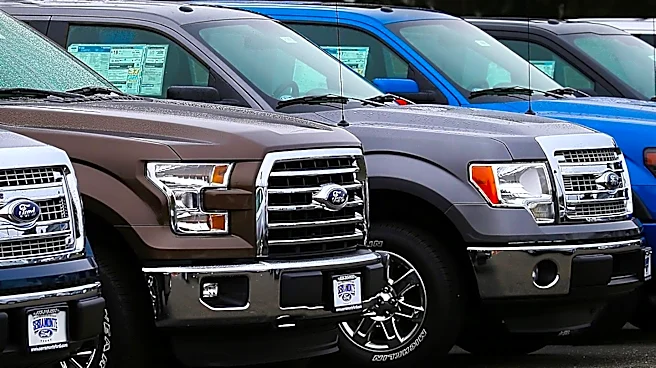
its daily rental fleet business, which contributed to the sales decrease. Ford's U.S. sales have been down 9.7% year-to-date, compared to a 2.4% decline for the overall industry. The company has been focusing on retail sales of its F-Series pickup trucks, recovering from production issues caused by aluminum supplier fires. Ford's strategy includes sunsetting select models and reducing low-margin rental fleet volume to prepare for new product introductions.
Why It's Important?
Ford's sales strategy reflects a shift in focus towards more profitable retail sales and new product development. By reducing reliance on low-margin rental sales, Ford aims to improve its financial health and market position. The decline in sales, while planned, highlights the challenges Ford faces in a competitive automotive market. The company's ability to adapt and innovate will be crucial as it navigates production challenges and prepares for future product launches. This strategic pivot could impact Ford's market share and influence industry trends towards more sustainable and profitable business models.
What's Next?
Ford is expected to continue its focus on retail sales and new product development. The company plans to introduce new models by the end of the decade, which could help boost sales and market presence. Stakeholders will be watching Ford's ability to execute its strategy and recover from production setbacks. The automotive industry may see increased competition as companies adjust their strategies to focus on profitability and innovation.