




What's Happening?
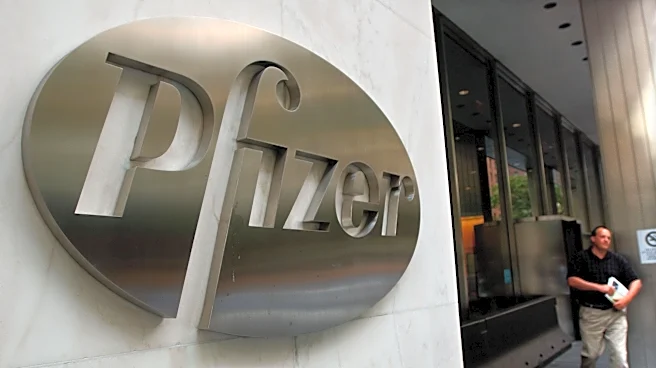
Pfizer, a global biopharmaceutical company, is actively working to expand its oncology and metabolic portfolios to counteract a decline in sales of pandemic-related products. The company has made strategic acquisitions, including Seagen and Metsera, to strengthen
its long-term drug pipeline. In the 12 months ending September 27, 2026, Pfizer reported revenues of $63.6 billion, marking a 1.3% growth, and a GAAP net income of $4.0 billion, influenced by integration and restructuring costs. For the current fiscal year, Pfizer anticipates a slight revenue decrease to $62.2 billion, but projects a rise in net income to $8.9 billion. The company is also heavily investing in new drug development, with 20 drug development starts planned for 2026 and eight data readouts expected. This includes efforts to re-enter the GLP-1 weight-loss drug market, following positive Phase II trial results for an injectable GLP-1.
Why It's Important?
Pfizer's strategic shift is crucial for its long-term financial health and market position within the U.S. pharmaceutical industry. The company faces significant challenges, including revenue concentration in key products nearing patent expiration, which could lead to competition from biosimilars. The substantial integration costs and execution risks associated with major acquisitions like Seagen and Metsera also pose financial and operational hurdles. Furthermore, ongoing legal risks, such as product liability claims and patent validity challenges, could impact profitability and investor confidence. By diversifying its portfolio, particularly into oncology and metabolic treatments, Pfizer aims to secure new revenue streams and reduce its reliance on a few blockbuster drugs, thereby mitigating future financial volatility and maintaining its competitive edge in the U.S. and global markets.
What's Next?
Pfizer is set to continue its aggressive drug development schedule, with 20 new drug development starts and eight data readouts anticipated in 2026. These readouts will provide critical insights into the progress of its pipeline treatments, particularly in oncology and metabolic health. The company's efforts in the GLP-1 weight-loss drug market will be closely watched, as successful advancement could position Pfizer as a significant competitor in this rapidly growing sector. Investors and industry observers will also monitor the integration of Seagen and Metsera, as successful assimilation is vital for realizing the full potential of these acquisitions. The company's ability to manage legal risks and navigate patent expirations will also be key factors influencing its performance in the coming years.
Beyond the Headlines
Pfizer's current trajectory highlights a broader trend within the pharmaceutical industry: the imperative for established giants to innovate and adapt in a post-pandemic world. The decline in COVID-19 related product sales has forced a re-evaluation of core strategies, pushing companies to seek growth through diversification and strategic M&A. This shift also underscores the immense financial and scientific commitment required to bring new drugs to market, particularly in complex areas like oncology and metabolic disorders. The high costs of research and development, coupled with the risks of clinical trial failures and intense competition, mean that successful portfolio expansion is not guaranteed. Furthermore, the ongoing debate around drug pricing and patent protection in the U.S. could influence Pfizer's future profitability and its ability to recoup its significant investments in new therapies.