





What's Happening?
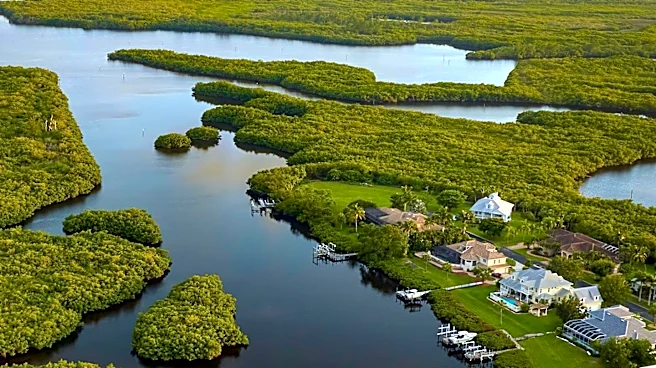
Mark Zuckerberg, CEO of Meta, has reportedly purchased a newly completed mansion on Indian Creek Island in Miami, known as the 'Billionaire Bunker,' for an estimated price between $150 million and $200 million. This island is renowned for its exclusivity
and privacy, housing some of the world's wealthiest individuals, including Jeff Bezos. The island features only 41 waterfront lots, with the western side offering even more seclusion due to its larger lot sizes and proximity to the intracoastal waterway. The island is an independent municipality with its own government and police force, ensuring high security and privacy for its residents.
Why It's Important?
The acquisition by Zuckerberg highlights a trend among billionaires seeking exclusive and secure residences, particularly in tax-friendly states like Florida. This move is part of a broader migration of wealthy individuals to South Florida, driven by factors such as Florida's lack of state income tax and potential wealth taxes in states like California. The influx of high-net-worth individuals is significantly impacting the luxury real estate market in the region, driving up property values and increasing demand for ultra-luxury homes. This trend underscores the growing appeal of Florida as a haven for the ultra-wealthy seeking to protect their assets.
What's Next?
As more billionaires consider relocating to Florida, the demand for exclusive properties like those on Indian Creek Island is expected to rise. This could lead to further increases in property values and potentially more development of luxury real estate in the area. Additionally, the potential implementation of wealth taxes in states like California may accelerate this migration trend, prompting more high-net-worth individuals to seek residences in tax-friendly states. Real estate agents and developers in South Florida may continue to see increased business as they cater to this affluent clientele.
Beyond the Headlines
The migration of billionaires to exclusive enclaves like Indian Creek Island raises questions about the social and economic impacts on local communities. While the influx of wealth can boost local economies and increase property values, it may also contribute to greater economic disparity and challenges related to housing affordability for local residents. Furthermore, the concentration of wealth in such areas could influence local politics and policies, potentially prioritizing the interests of the ultra-wealthy over broader community needs.