







What's Happening?
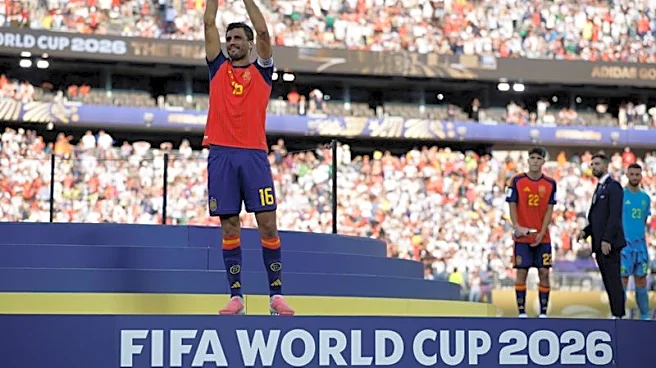
Spain's national soccer team secured a 1-0 victory over Argentina in the 2026 FIFA World Cup final, held in New Jersey. The match was characterized by Spain's overwhelming control, with over 65% possession and preventing Argentina from registering a single
shot on target. Ferran Torres scored the only goal in extra time, leading Spain to their second World Cup title. The game was marked by controversy, including the sending off of Argentina's Enzo Fernández with a red card in the 93rd minute. The victory capped an unbeaten campaign for Spain, showcasing their tactical efficiency and control.
Why It's Important?
Spain's victory highlights their tactical superiority and ability to execute a game plan effectively, reinforcing their status as a leading force in international soccer. This win may influence coaching strategies and player development programs globally, as teams seek to emulate Spain's success. For Argentina, the loss represents a significant setback, particularly for Lionel Messi, whose future in international soccer remains uncertain. The match's outcome may prompt Argentina to reassess their tactical approach and player selection for future competitions.
What's Next?
Spain will likely focus on maintaining their competitive edge in upcoming international tournaments, including the UEFA European Championship. Argentina faces the challenge of rebuilding and addressing tactical weaknesses exposed during the final. The performance of young players like Ferran Torres could lead to increased interest from top clubs, impacting player transfers and team dynamics. Additionally, the match's outcome may influence managerial decisions and strategic planning within both national teams.
