



What's Happening?
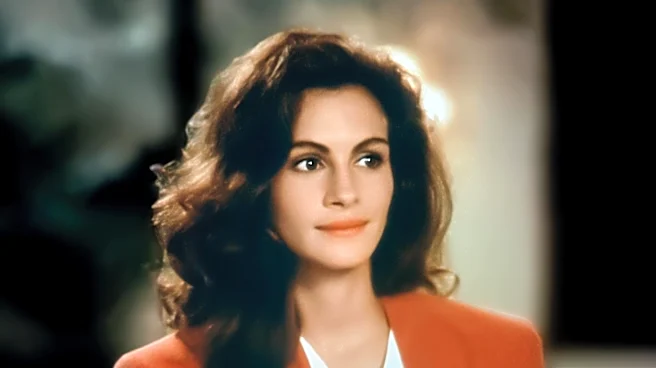
Julia Roberts' portrayal of Vivian in the 1990 film "Pretty Woman" is being recognized for its iconic fashion, specifically a brown sleeveless polka dot dress worn during a polo match scene. This costume is featured in a list of the "10 Best Brown Costumes
from Modern Movies." The film, a modern romantic comedy, depicts Vivian's rags-to-riches fashion transformation after she is paid to spend a week with a wealthy man. The dress, designed by Marilyn Vance, is described as a knee-length brown sleeveless dress with white polka dots, cinched at the waist with a brown leather belt. Her accessories for this look included a white straw hat, pearl drop earrings, wrist gloves, and kitten heels, contributing to a chic and polished aesthetic.
Why It's Important?
The inclusion of Vivian's polka dot dress in a list of iconic movie costumes underscores the lasting cultural impact of "Pretty Woman" and Julia Roberts' role in shaping cinematic fashion. Such recognition highlights how specific outfits can become synonymous with characters and films, influencing fashion trends and remaining memorable for decades. For the entertainment industry, this emphasizes the critical role of costume design in character development and storytelling, demonstrating how visual elements contribute significantly to a film's overall legacy and audience connection. It also reinforces the film's status as a classic romantic comedy, continually drawing new viewers and maintaining its relevance in popular culture.
Beyond the Headlines
Beyond its aesthetic appeal, the fashion in "Pretty Woman," particularly Vivian's transformation, symbolizes themes of social mobility and self-reinvention. The shift from her initial attire to more polished ensembles, like the polka dot dress, visually communicates her journey and integration into a different social sphere. This aspect of costume design goes beyond mere clothing; it acts as a narrative device, reflecting character growth and societal perceptions. The film's enduring popularity and the continued discussion of its fashion elements suggest a deeper cultural fascination with Cinderella-esque narratives and the power of appearance in personal and social identity.