



What's Happening?
Alex Ovechkin's performance has significantly declined, leading to discussions about his retirement and its implications for other veteran players like Sidney Crosby. Ovechkin, the NHL's all-time leading goal scorer, is in what appears to be his farewell
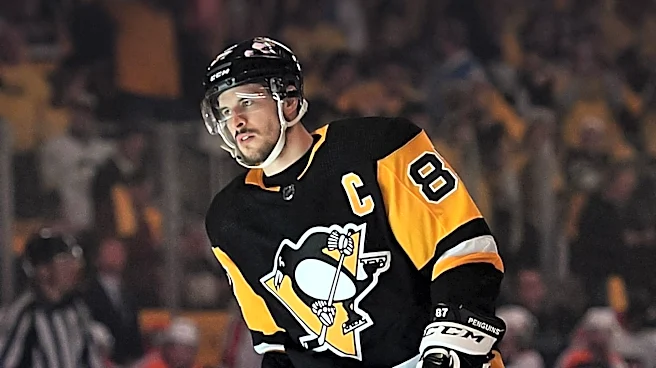
season, but his game has fallen precipitously. He has scored only one goal in 22 games, with a 2.6 percent shooting percentage and just 38 shots on goal. This is a stark contrast to his career average of 13 percent and previous seasons where he rarely dipped below 10 percent. His lack of foot speed, ineffectiveness in defense, and inability to generate offensive plays are evident, putting the Washington Capitals in a precarious position. The Capitals, despite making significant offseason acquisitions, are a .500 team, and there is speculation about whether Ovechkin might become a healthy scratch to aid the team's playoff hopes. This situation is being used as a cautionary tale for Sidney Crosby, who, while not as ineffective as Ovechkin, is also facing an aging team in the Pittsburgh Penguins.
Why It's Important?
The dramatic decline of Alex Ovechkin, a future Hall of Famer, carries significant implications for the Washington Capitals and the broader NHL. For the Capitals, his diminished performance creates a dilemma: continue playing a franchise icon who is no longer contributing effectively, or make the difficult decision to bench him for the team's competitive interests. This situation highlights the harsh reality of professional sports, where even legendary athletes eventually face the inevitable decline of their physical abilities. For Sidney Crosby and the Pittsburgh Penguins, Ovechkin's struggles serve as a stark reminder of the importance of timing in retirement decisions. While Crosby is still performing at a higher level, the Penguins are also an aging team in need of a rebuild. The discussion around Ovechkin underscores the pressure on star players to maintain their legacy and avoid tarnishing it by playing beyond their prime, influencing how other veterans might approach the latter stages of their careers and their teams' future planning.
What's Next?
For Alex Ovechkin and the Washington Capitals, the immediate future involves critical decisions regarding his role. If his performance continues to be a liability, the team may face the unprecedented choice of making him a healthy scratch to improve their playoff chances. This would be a bold move with significant fan and media implications. For Sidney Crosby, the situation with Ovechkin intensifies the scrutiny on his own future. As an unrestricted free agent after this season, Crosby will need to decide whether to remain with the Penguins, potentially through a rebuild, or seek a trade to a contender. The Penguins, in turn, must determine how to navigate their rebuild, considering Crosby's desire to play and his legacy. The coming months will likely see increased speculation about both players' immediate roles and long-term career paths, with Ovechkin's struggles serving as a backdrop for these crucial discussions.
Beyond the Headlines
The decline of Alex Ovechkin transcends mere on-ice performance; it delves into the complex interplay of legacy, loyalty, and the brutal economics of professional sports. For fans, witnessing a legend struggle can be disheartening, raising questions about how athletes should manage the end of their careers to preserve their iconic status. For franchises, the decision to bench or part ways with a beloved figure like Ovechkin is fraught with emotional and financial considerations, balancing competitive integrity with fan sentiment and historical reverence. This scenario also highlights the unique pressures faced by athletes who have achieved unparalleled success; the expectation to maintain that level of play can be immense, making the eventual decline all the more stark. The comparison to Sidney Crosby underscores a broader philosophical debate in sports: is it better to retire at the peak of one's powers, or to play as long as possible, even if it means a diminished final chapter? This situation offers a poignant case study in the human element of professional athletics.