
What's Happening?
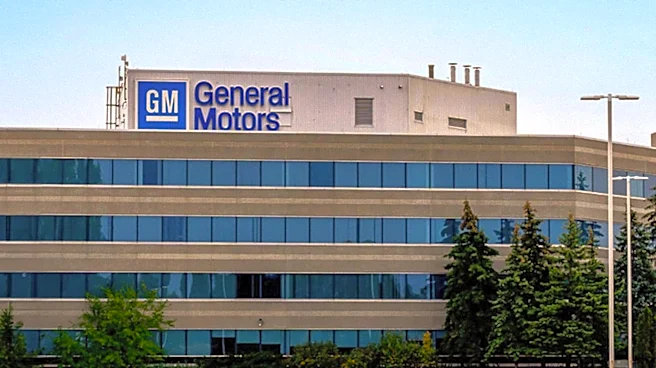
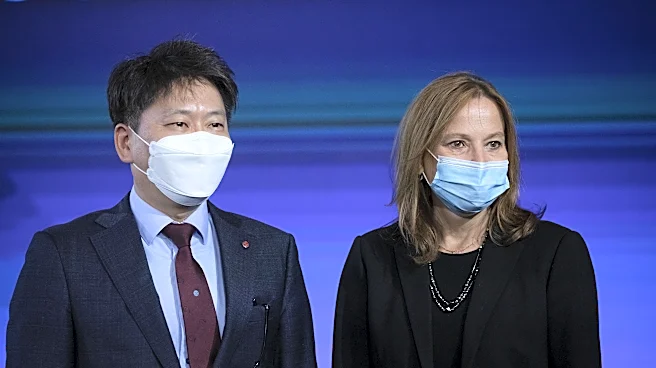
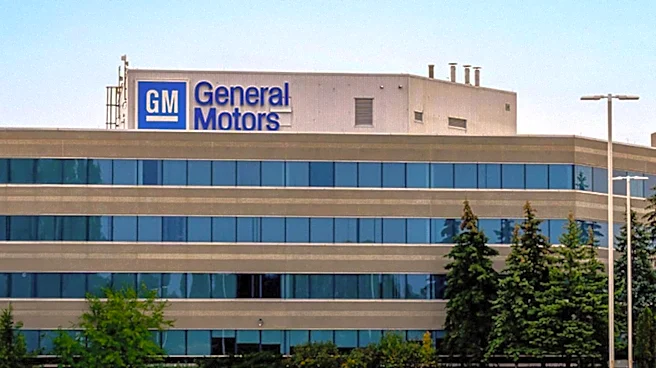
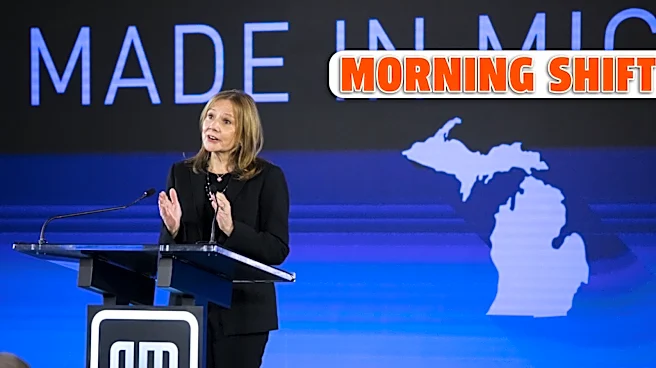
General Motors Company's board is actively evaluating succession options for its longtime Chief Executive Officer, Mary Barra, who will turn 65 on Christmas Eve. Global product chief Sterling Anderson has emerged as a leading contender for the CEO role,
signaling a strategic shift towards prioritizing software and autonomous driving expertise within the company. The board is considering various transition scenarios for Barra, including her remaining as CEO into next year or moving into an executive chair position. While Anderson's technical background aligns with the board's vision for a software-defined automotive industry, questions remain about his readiness to lead a large manufacturing company, given his relatively short tenure at GM. Chief Financial Officer Paul Jacobson is also considered a viable internal candidate, particularly due to his financial acumen and positive standing with Wall Street.
Why It's Important?
This potential leadership transition at General Motors is significant as it underscores the automotive industry's evolving priorities. The focus on Sterling Anderson, with his background in artificial intelligence and vehicle software, highlights a strategic pivot away from traditional manufacturing leadership towards expertise in cutting-edge technology. This shift reflects the increasing importance of software-defined vehicles and autonomous driving capabilities in the future of the automotive sector. For GM, a successful transition could accelerate its development cycles and strengthen its position in the competitive electric and autonomous vehicle markets. Conversely, an unsuccessful transition or a misstep in leadership could hinder its progress. The emphasis on technical expertise over traditional financial acumen also indicates a broader industry trend where technological innovation is becoming a primary driver of value and competitive advantage.
What's Next?
The General Motors board is currently assessing both internal and external candidates for the CEO position, having retained executive search firm Heidrick & Struggles. The deliberations will likely focus on balancing the need for technological leadership with the experience required to manage a large, complex global manufacturer. A decision on Mary Barra's successor and the timing of her transition is expected as she approaches her 65th birthday. The outcome will determine the strategic direction of GM, particularly regarding its investments and focus on software and autonomous driving initiatives, such as the planned 2028 hands-free, eyes-off Cadillac launch. The market will closely watch whether the board prioritizes a candidate with deep technical expertise like Anderson or one with a more traditional financial background like Jacobson.
Beyond the Headlines
The potential succession at General Motors reflects a fundamental transformation occurring across the automotive industry, moving beyond mechanical engineering to embrace software and artificial intelligence as core competencies. This shift has broader implications for the workforce, requiring new skill sets and potentially altering traditional career paths within automotive companies. The emphasis on a leader with a strong software background suggests that the future of car manufacturing will increasingly resemble that of a technology company, with vehicles becoming platforms for digital services and advanced features. This could lead to new revenue streams through subscriptions and software updates, fundamentally changing the business model of automakers. The challenge for GM, and the industry as a whole, will be to integrate these new technological paradigms while maintaining the reliability and safety standards expected of traditional vehicle manufacturing.