







What's Happening?
Airbus plans to invest between EUR 600 million and EUR 900 million in a new factory in Toulouse, France, dedicated to manufacturing engine pylons. This new facility, named 'Saint-Éloi du futur,' will be built on a 48-hectare plot near Toulouse-Blagnac
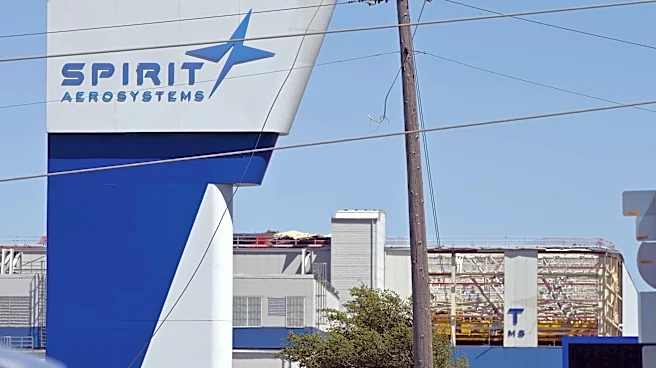
Airport. The project aims to modernize Airbus's industrial facilities and strengthen local expertise in pylon manufacturing. A significant aspect of this development for the U.S. is Airbus's decision to relocate A220 pylon production from Wichita, Kansas, to this new Toulouse plant. This move follows Airbus's acquisition of Spirit AeroSystems assets in December 2025. The new plant is expected to create approximately 3,500 jobs once it reaches full capacity around 2037. A public consultation for the project is scheduled from November 24 to February 16, 2027, with construction potentially starting around 2029 and production commencing in 2031. This expansion is part of Airbus's broader strategy to increase output to meet the high demand for new aircraft.
Why It's Important?
The relocation of A220 pylon production from Wichita, Kansas, to Toulouse signifies a shift in aerospace manufacturing operations that could impact the U.S. aerospace industry. While the exact number of jobs affected in Wichita is not specified, the move indicates a consolidation of critical component production closer to Airbus's core facilities in Europe. This could lead to a reduction in manufacturing activities or future investment opportunities in Wichita, a significant hub for aerospace manufacturing. For Airbus, centralizing pylon production aims to enhance efficiency, modernize facilities, and secure long-term manufacturing and maintenance operations. This strategic decision reflects a trend among major aerospace companies to optimize supply chains and leverage regional expertise, potentially influencing future investment decisions by other aerospace firms regarding their U.S. operations. The move also highlights the competitive landscape of global aerospace manufacturing, where companies continuously evaluate the best locations for production based on cost, logistics, and strategic control.
What's Next?
The immediate next step for Airbus involves a public consultation period from November 24 to February 16, 2027, which is a prerequisite for the project to proceed. Following successful consultations and regulatory approvals, construction of the new Toulouse plant could begin around 2029, with production slated to start in 2031. For Wichita, Kansas, the implications will unfold as Spirit AeroSystems and other aerospace entities adjust to the relocation of A220 pylon production. This could involve reallocating resources, seeking new contracts, or adapting their workforce. The broader U.S. aerospace sector will likely monitor how this relocation impacts the supply chain and manufacturing capabilities within the country. Stakeholders in Kansas may explore strategies to attract new aerospace investments or diversify their manufacturing base to mitigate potential impacts from such shifts in global production. The long-term effects will depend on how Spirit AeroSystems repositions itself and how the U.S. government and industry respond to maintain competitiveness in aerospace manufacturing.
Beyond the Headlines
This strategic move by Airbus to consolidate A220 pylon production in Toulouse, away from Wichita, Kansas, underscores deeper trends in global industrial policy and supply chain resilience. It highlights a potential shift towards 'reshoring' or 'nearshoring' critical manufacturing capabilities closer to corporate headquarters, driven by factors such as geopolitical stability, intellectual property control, and the desire for tighter integration between design and production. For the U.S., this could signal a need to re-evaluate incentives and policies aimed at retaining high-value manufacturing jobs and intellectual capital in the aerospace sector. The decision also brings into focus the long-term economic development strategies of regions heavily reliant on aerospace, like Wichita. It prompts questions about the future of international manufacturing partnerships and the balance between globalized production networks and localized control over key components. This development could influence future investment decisions by other multinational corporations, potentially leading to a more fragmented global manufacturing landscape where strategic industries prioritize regional self-sufficiency.