

What's Happening?
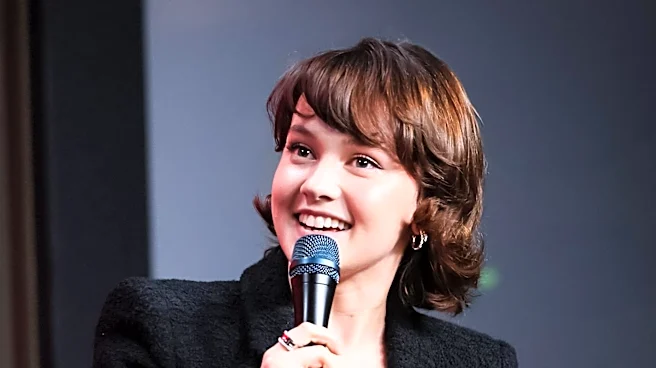
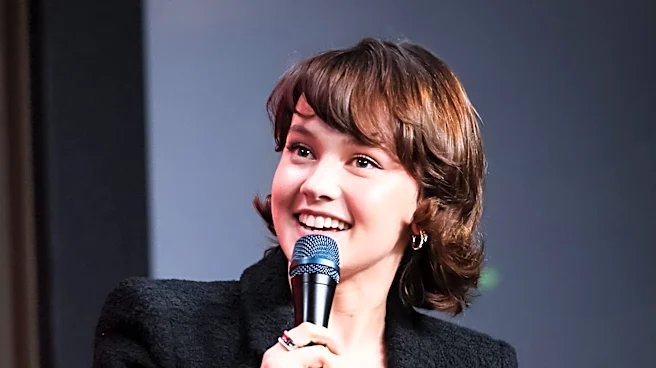
Olivia Cooke, known for her role as Queen Alicent Hightower in HBO's 'House of the Dragon,' has publicly criticized the series' fandom, citing prevalent misogyny and racism. In an interview with GQ, Cooke revealed that she deactivated her social media
profiles, particularly Instagram, before the third season's launch in June. She stated that the fandom contains 'a lot of ugliness,' is 'permeated by misogyny,' and includes 'a lot of racism,' which she tries to minimize in her thoughts. Cooke also expressed difficulty understanding some fan interpretations and theories, noting that they often diverge significantly from the on-screen narrative. Her decision to step back from social media stems from these negative experiences and a broader reflection on the nature of celebrity in acting, which she believes has become a 'monster' focused on follower counts and brand deals rather than artistic and creative merit. This sentiment is echoed by other actors in the 'Game of Thrones' universe, such as Sophie Turner, who also reported negative impacts on her mental health due to social media interactions.
Why It's Important?
This situation highlights the growing challenges faced by public figures, particularly actors in popular franchises, due to the intense and often toxic nature of online fandoms. Cooke's withdrawal from social media underscores a broader concern about the mental health impact of constant scrutiny, misogynistic attacks, and racist comments directed at individuals in the entertainment industry. It brings to light the dark side of fan engagement, where passion can devolve into harassment and abuse, forcing actors to disengage from platforms that are often considered essential for promotion and audience connection. The prevalence of misogyny and racism within a major fantasy fandom also reflects societal issues, indicating that these prejudices are not confined to specific online spaces but permeate popular culture. This could lead to a reevaluation of how actors interact with their audiences and how production companies manage online communities to protect their talent, potentially influencing future social media policies and fan engagement strategies within the entertainment sector.
What's Next?
In the immediate future, Olivia Cooke is likely to maintain her distance from social media, focusing on her acting career and personal well-being. Her public statements may encourage other actors to speak out about similar experiences or to adopt similar strategies for managing their online presence. The criticism could also prompt HBO and other production companies to review and potentially implement stricter guidelines or support systems for their talent regarding online harassment. While there's no indication of direct action against specific fan groups, the broader conversation around toxic fandoms is expected to continue, potentially leading to more nuanced approaches to community management and content moderation on social media platforms. This incident might also influence how future seasons of 'House of the Dragon' are promoted, with a possible shift towards more controlled interactions between cast members and the audience.
Beyond the Headlines
The implications of Cooke's experience extend beyond individual celebrity interactions, touching upon the evolving relationship between creators, content, and consumers in the digital age. The 'monster' of celebrity, as Cooke describes it, points to a cultural shift where the lines between fictional characters and real individuals become blurred, leading to personal attacks based on character portrayals. This raises ethical questions about the responsibility of platforms to curb hate speech and the psychological toll on individuals who are subjected to it. Furthermore, the presence of misogyny and racism within a fantasy fandom, which often prides itself on inclusivity and escapism, reveals a deeper societal problem where these prejudices are pervasive even in imagined worlds. This incident could contribute to a broader discussion about media literacy, critical thinking in fan communities, and the need for greater empathy and respect in online interactions, ultimately shaping how future generations engage with entertainment and public figures.